Buddhism and Empire II: Portrait of a monk

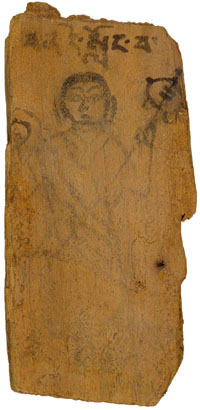
IOL Tib N 2280This little piece of wood (IOL Tib N 2280) was found among the Tibetan woodslips in the hill fort of Mazar Tagh, one of the outposts of the Tibetan Empire. It can be dated to the period of the Tibetan occupation of Khotan, between the 790s and 840s. On the top is written ban de slong ba, “a begging monk”. It is probably a portrait, sketched by one of the soldiers at the fort, of an actual monk who came to beg there. Though Mazar Tagh lies some way from the nearest city, Khotan, it was actually a pilgrimage site, known to the Khotanese Buddhists as The Hill. Thre is evidence for this among the Khotanese manuscripts, where we find a poetic account of one monk’s pilgrimage to The Hill.

So our monk in the portrait probably made the pilgrimage to The Hill, and then visited the Tibetan fort to ask for food. We know that the Tibetan soldiers often ran out of food supplies, from their many letters written to the main garrison at Khotan to ask for more. I wonder how often they gave anything to the pilgrim monks. That partly depends on how far Buddhist values had permeated the ordinary Tibetan soldiers manning the Empire’s outposts. Since giving to monks was an important way of generating merit for oneself, a soldier who had truly absorbed Buddhism might give something despite running short of food.

The picture of the monk is, obviously, rather crude and certainly not the work of a trained artist. So we can’t draw conclusions about the monk’s ethnic origin based on the way his facial features are drawn here; I would still suggest that he is most likely to have been Khotanese. The upper undergarment and robe (worn over the right shoulder) are drawn clearly enough, as is the fan he holds in his left hand. It’s not clear what he is meant to be holding in his right hand; perhaps a begging bowl is intended.

Further suggestions welcomed!

Sources
Emmerick, R.E. A Guide to the Literature of Khotan. Tokyo : The International Institute for Buddhist Studies, 1992.

In search of the Guhyagarbha tantra

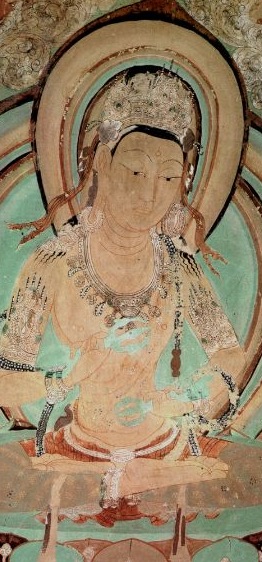
Vajrasattva (Cave 14)The Guhyagarbha tantra is a vital part of Tibet’s Nyingma (“ancient”) lineages. And yet, ever since the 11th century, when certain partisans of the new translations questioned the authenticity of the Guhyagarbha tantra, its status became a disputed issue in Tibet.

The most detailed and sustained attack on the authenticity of the Guhyagarbha tantra was written by the 11th century translator Gö Khugpa Lhetse, based on his failure to find any lineage for the tantra in India and the fact that, according to his judgement, it didn’t resemble genuine Indian tantras. Gö Khugpa’s criticism was rather rash: features which he found suspect in the Guhyagarbha are in fact also found in tantras of the new translation period that he accepted. Nevertheless, enough doubt remained that the tantra was excluded from the scriptural canon (bka’ ‘gyur) compiled in the 14th century.

According to some Nyingma apologists, Gö Khugpa attacked the tantra because he had been refused certain transmissions by Zurpoché Shakya Jungne, one of the most influential Nyingma figures of that period. The story has some credibility, as Gö Khugpa is portrayed as a competitive and rather bad-tempered character in some non-Nyingma histories, including the Subtle Vajra, the early Sakya history translated by Cyrus Stearns in his book Luminous Lives. There we see Gö Khugpa falling out with his teacher Drogmi and trying to outdo him by travelling to Nepal to meet the great master Maitripa (in fact he meets Drogmi’s own teacher Gayadhara, who fools him into thinking he is Maitripa).

In any case, if Sakya scholars have not tended to join in these attacks on the Guhyagarbha tantra’s authenticity, it may be because Śākyaśrībhadra, the Kashmiri guru who taught Sakya Paṇḍita, verified a Sanskrit manuscript of the tantra which had been found at Samyé (this is mentioned in a 12th or 13th century Sakya biography of Śākyaśrībhadra). The manuscript was passed from hand to hand until it reached Gö Lotsawa Zhönu Pal, author of the Blue Annals, who wrote:

When the Great Kashmiri Pandita [Śākyaśrī] arrived at Samyé, he discovered the Sanskrit text of the Guhyagarbha. Later it came into the hands of Tatön Ziji, who presented it to it Shagang Lotsawa. The latter sent the manuscript to Chomden [Rigpai] Ralgri, who accepted it and composed The Flower to Ornament the Accomplishment of the Guhyagarbha. He showed the text at an assembly of tantrikas at Mamoné, and highly praised it. After that Tarpa Lotsawa made a translation of the Subsequent Guhyagarbha Tantra which had not been found before. Most of the pages of the manuscript were damaged. The remaining pages of the Sanskrit manuscript are in my hands.

So the authenticity of the Guhyagarbha tantra seems to be rather a non-issue, despite all the polemical activity devoted to the question over the centuries in Tibet. Still, some may be interested in the Guhyagarbha-related material that is to be found in the Dunhuang collections. While these manuscripts are alost certainly no earlier than the 10th century, they do provide some insights into the role of the Guhyagarbha in early Tibet:

  • Some of the sādhanas (manuals for meditation practice) quote the Guhyagarbha, though this is a little inconclusive, since (i) it is difficult to find exact parallel passages in the tantra itself and (ii) the Guhyagarbha is not mentioned by name. See for example IOL Tib J 332, which was originally noticed by Ken Eastman in his article listed below.
  • One manuscript (IOL Tib J 540) is a list of the mantras and the names of each of the 42 deities from the Guhyagarbha‘s peaceful maṇḍala.
  • One scroll, which I mentioned in the previous post (Pelliot tibétain 849), contains a list of tantras in Tibetan and Sanskrit. It includes the Guhyagarbha–listed as rgyud gsang ba’I snyIng po in Tibetan and ‘Gu yya kar rba tan tra in Sanskrit (the Sanskrit tranliterations on this scroll are wildly erratic). The scroll is, as I mentioned previously, probably notes from the teachings of an Indian guru who passed through Dunhuang on his way to China. However, it is dated to the very end of the 10th century, so this tells us little about the existence of the tantra in Tibet prior to this time.

Thus something of the Guhyagarbha tantra is there in the manuscripts, but it has a lesser presence than one might expect given its importance in the later Nyingma tradition. What is perhaps most striking is how many more references and quotations from a different tantra, the Guhyasamāja, are found among the manuscripts. The Guhyasamāja tantra itself appears in an almost complete manuscript (IOL Tib J 438), and is quoted more often and by name in various treatises and sādhanas. This raises the question of whether the Guhyasamāja tantra was actually more influential in pre-11th century Tibet than the Guhyagarbha tantra.

Perhaps the attacks on the Guhyagarbha and similar tantras were after all, as the Nyingma apologists suggest, politically motivated. In the struggles between the holders of the old lineages (i.e. the incipient Nyingmapas, the Zur family in particular) and the translators of the newly arrived tantric lineages, the Guhyagarbha was an easy target, as it was not featured in any of the new lineages, unlike the Guhyasamāja. Equally the Nyingmapas seem to have focussed more and more on the Guhyagarbha from the 11th century onward–perhaps exactly because it was not shared with the new schools.

References
1. Dorje, Gyurme. (no date). The Guhyagarbha Tantra: Introduction. Online at the Wisdom Books Reading Room
2. Eastman, Kenneth. 1983. “Mahāyoga Texts at Tun-huang”. Bulletin of the Institute of Cultural Studies, Ryukoku University 22: 42-60.
3. van der Kuijp, Leonard. 1994. “On the Lives of Śākyaśrībhadra (?-?1225)”. Journal of the American Oriental Society 114/4: 599–616. Available on JSTOR.
4. Martin, Dan. 1987. “Illusion Web: Locating the Guhyagarbha Tantra in Buddhist
Intellectual History”. Christopher I. Beckwith (ed.) Silver on Lapis: Tibetan Literary Culture and History. Bloomington: The Tibet Society. 175-220. Available for free download here.
5. Roerich, G.N. (trans.) 1949. The Blue Annals. Calcutta: Royal Asiatic Society of Bengal. (See pp.104-5.) Also available here.
6. Stearns, Cyrus. 2001. Luminous Lives. Boston: Wisdom Publications.
7. Wangchuk, Dorji. 2002. “An Eleventh-Century Defence of the Authenticity of the Guhyagarbha Tantra“. In Eimer and Germano (eds), The Many Canons of Tibetan Buddhism. Leiden: Brill.

Images
A 9th century wall painting of Vajrasattva from Dunhuang Cave 14. © The Huntington Archive.

The nine vehicles of the Nyingma: new sources

Deux Magots café

It is amazing how many Dunhuang manuscripts of great value for understanding how Tibetan Buddhism developed were overlooked in the century since their discovery. I have already discussed previously overlooked sources on Avalokiteśvara and Padmasambhava. Let’s look here at some “new” sources for the way the Buddha’s teachings are divided up by the Nyingma school of Tibetan Buddhism

The Nyingma school recognises 9 categories of teachings, known as 9 ‘vehicles’ (theg pa, or yāna in Sanskrit). The classical Nyingma formulation, represented in sources like Longchenpa’s Treasury of Philosophical Tenets is:

  1. Śrāvaka
  2. Pratyekabuddha
  3. Bodhisattva
  4. Kriyā
  5. Ubhaya
  6. Yoga
  7. Mahāyoga
  8. Anuyoga
  9. Atiyoga

This system was rejected by the new schools that arose after the 10th century. Some writers of the new schools also cast doubt on the genuine antiquity of the 9 vehicles, and it does seem there was probably no real Indian ancestor. All of these classes of teachings may did exist in India, but bringing them together in this way, and particularly calling them all ‘vehicles’ seems to have happened in Tibet.

Now the 9 vehicles appear throughout the terma (‘treasure’) literature, but modern scholarship tends to take the sceptical position that these texts should be treated as products of the time of their appearance, rather than of when they were said to have been concealed in the late 8th century. Transmitted literature found in the Kangyur and Tengyur and other canonical collections is more admissible as evidence, even though the attribution of authorship is often questionable.

So among the transmitted literature we do have some works referring to the 9 vehicles, or something like them. From the 8th century there is The Garland of Views, which is generally accepted to have been written by Padmasambhava, or at least somebody from the same period (see the Tibetan text and translation in Samten Karmay’s The Great Perfection). There is another text supposedly from the same period, Explaining the Stages of the View, attributed to the early translator Kawa Paltseg, which does contain the 9 vehicles in exactly the same way as they are presented in the later Nyingma school, but for several reasons this looks like a later text falsely attributed to Kawa Paltseg. Then from the late 9th century we have Nub Sangye Yeshe’s Armour Against Darkness, his commentary on the great Anuyoga scripture Gongpa Düpai Do (the 9 vehicles are not explicitly presented in the root text).

If these texts really do date from the 8th to 10th centuries, we ought to see some versions of the 9 vehicles in the Dunhuang manuscripts. Until the last few years however, all we have had is one scroll: Pelliot tibétain 849. This scroll has been known about since the 1920s, when a book-length study of it was published in France by Josef Hackin. The scroll contains a whole series of notes, probaby taken from the teachings of an Indian guru passing through Dunhuang. Among these notes is something similar to the 9 vehicle system of the Nyingma, but still with significant differences.
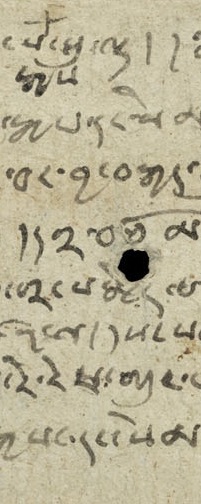
IOL Tib J 644Then a few years ago, when Jake Dalton and I were working on a catalogue of the tantric manuscripts in the Tibetan Dunhuang collections, we came across two more versions of the 9 vehicle system. Amazingly, both were more much more interesting and comprehensive treatments of the subject than the one found in Pelliot tibétain 849.

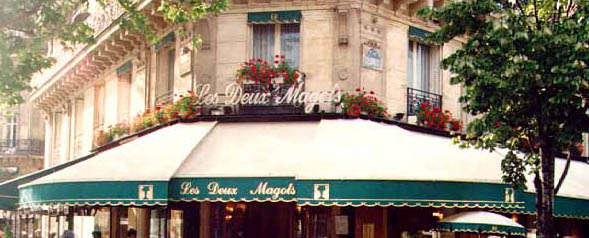
The first of these manuscript is Pelliot tibétain 656, entitled The Seven Great Transmission Types (Spyi’i lung chen po bdun). It’s a short text, short enough that Jake and I translated it in one sitting at the Deux Magots café in Paris (from a microfilm printout, not the manuscript!). The 7 types are equivalent to the 9 vehicles minus the Pratyekabuddha and Upāya yoga categories; thus:

  1. Śrāvaka
  2. Sautrāntika (here this means a non-tantric Mahāyanist)
  3. Kriyā
  4. Yoga
  5. Mahāyoga
  6. Anuyoga
  7. Atiyoga

In a very clear and methodical treatment, each of these is discussed in terms of its (i) view, (ii) meditation, (iii) practices and (iv) vows. This is an elegant and sophisticated little treatise. In essence there is little difference between the way these classes of teachings are described here and the description of their equivalents in classical Nyingma sources.

The second “new” manuscript is IOL Tib J 644. Here the 9 vehicles appear in their entirety, exactly as they do in the later tradition. Again, the treatment is very systematic, distinguishing the 9 categories in terms of (i) their deity system, (ii) the relationship between deity and practitioner and (iii) the marks of accomplishment. Jake provided a translation of the complete text in his recent article “A Crisis of Doxography”. The only difference between this manuscript and the later tradition, and I suppose it is not such a small difference, is that the word ‘vehicle’ is never used in the manuscript to refer to these classes. This is significant in that some scholars of the new schools strongly rejected the idea of calling these tantric classes ‘vehicles’. Sakya Paṇḍita, for one, argued that Atiyoga should be treated as a manifestation of wisdom, but not as a vehicle in itself. The general tendency to refer to the 9 categories as vehicles seems to postdate our manuscripts, that is to say, it was not common until after the 10th century.

References
1. Dalton, Jacob. 2005. “A Crisis of Doxography: How Tibetans Organized Tantra in the 8th-12th Centuries”. Journal of the International Association of Buddhist Studies 28.1: 115–182.
2. Hackin, Josef. 1924. Formulaire sanscrit-tibétain du Xe siécle. Paris: Librairie orientaliste Paul Geunthner.
3. Kapstein, Matthew. “New Light on an Old Friend: PT 849 Reconsidered”. Tibetan Buddhist Literature and Praxis. Leiden: Brill. 9–30.
3. Karmay, S. 1988. The Great Perfection. Leiden: Brill.

Tibetan texts
1. Klong chen pa. Grub mtha’ mdzod [Treasury of Philosophical Tenets]. In the Mdzod bdun (click here for bibliographical references to the various editions).
2. Bka’ ba dpal brtsegs(?). Lta ba’i rim pa bshad pa [Explaining the Stages of the View]. Q.5843.
3. Gnubs Sangs rgyas ye shes. Sangs rgyas thams cad kyi dgongs pa ’dus pa mdo’i dka’ ’grel mun pa’i go cha [Armour Against Darkness]. Rnying ma bka’ ma rgyas pa, vols.50-51.
4. Padmasambhava(?). Man ngag gi rgyal po lta ba’i ‘phreng ba [The Garland of Views]. Q.4726.

Buddhism and Empire I: a soldier’s prayer

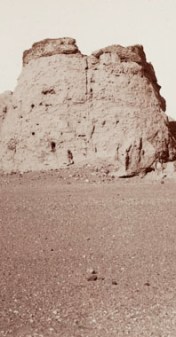
Miran fort Most of the sources we use to study Tibetan Buddhism during the time of the Tibetan empire are officially sanctioned: translations, royal edicts, monastic library lists and the the like. There are far fewer sources revealing how Buddhism was practised by ordinary Tibetans during the empire. Here is one such source: a soldier’s document from the Tibetan fort of Miran (Tibetan name: Nob chung) on the edge of the Lopnor desert.

Tibetan soldiers in Central Asia used wooden documents as much as paper ones. Wood was used for baggage tags, requisition notes, even for short letters. Usually these documents are small rectangular pieces of wood which we call woodslips. In some rare cases, we also find Buddhist texts on these woodslips. The one pictured here (IOL Tib N 404) contains a prayer and a brief dhāraṇī spell of the deity Uṣṇiṣasitātapatra.

The first thing scribbled on the woodslip is a prayer for refuge to the three jewels, with particular reference to avoiding hell (na rag). Then Uṣṇiṣasitātapatra is mentioned, followed by a short version of one of her dhāraṇī spells.

IOL Tib J 404

The role of dhāraṇīs in the popularization of Buddhism in Tibet is rarely mentioned, but they were hugely popular in the early period. The Dunhuang collections contain at least 40 manuscript copies of the Uṣṇiṣasitātapatra dhāraṇī alone. Perhaps we should say a little more about what a dhāraṇī is. Somewhat confusingly, the word can refer to two things:

  1. Dhāraṇī spells: a sequence of Sanskrit syllables, akin to a mantra, but usually longer; in fact dhāraṇī spells can be several pages long.
  2. Dhāraṇī sūtras: scriptural texts presenting one or more dhāraṇī spells. These usually set out the background of the spell—how and why it was taught by the Buddha—and explain the uses of the spell, which is usually to guard against various calamities, from illness to demons, enemies, death and rebirth in hell.

Sometimes, as with this woodslip, the spell was copied without the sūtra, presumably so that it could be carried around and recited when needed. Considering the many uses of dhāraṇī spells, it’s not surprising that soldiers of the Tibetan empire might have carried spells around with them for their protective properties. Of course, many would have memorized the spells, and this woodslip may have served more as an aide-memoire than a permanent record.

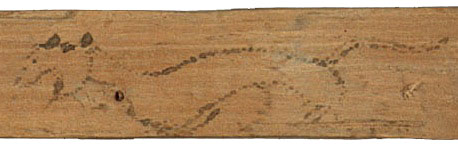
Finally, it’s worth turning over this particular woodslip, as the other side contains a charming picture of an animal. The species is a little hard to make out: a tiger, a dog or perhaps the ubiquitous marmot, found scampering throughout Central Asia? Suggestions please…

IOL Tib J 404 verso