Tibetan Chan III: more teachings of Heshang Moheyan

In the last post we were looking at Heshang Moheyan, the Chinese teacher of Chan (better known in the West as Zen) who became for Tibetans a lesson in how to go wrong in meditation. He taught, they said, a method of suppressing thoughts leading to a blank state of mind that could be mistaken for enlightenment, but was really just a dead end. Not only that, but his teachings were dangerous too, scorning the traditional division between virtue and vice, because both were just thoughts and therefore obstacles to enlightenment. As an old saying attributed to Moheyan goes, it doesn’t matter whether the cloud is white or black–it still blocks the sun.

Well, as I mentioned last time, the Dunhuang manuscripts contain the teachings of Heshang Moheyan, and they were much less simplistic, and more reasonable, than the later cartoonish version of him might suggest. For one thing, he didn’t advocate the suppression of thoughts (with a blank mind “like an egg” as one version of the Samyé debate nicely puts it). He says this quite clearly:

Therefore you should not suppress concepts. Whenever they arise, if you do not fabricate anything but instead let them go, then they will stay as they are and come to rest by themselves; thus you will not pursue them.

So I think we can say with some confidence that the ‘real’ Heshang Moheyan (insofar as we can claim to know him) was quite aware of the dangers of approaching meditation as the mere suppression of thoughts. He also didn’t think that the simple approach set out in the quotation above was right for everybody. In fact it was only intended for “those of the sharpest faculties.” For the rest of us he taught a series of five techniques of increasing subtlety. All are misguided in some way apart from the fifth and ultimate method.

1. A direct awareness of the arising of deluded thoughts.
2. An examination of that awareness.
3. The prevention of the arising of thoughts.
4. The perception that thoughts have no intrinsic nature (that is, they are empty).
5. Awareness of the arising of deluded thoughts without analysing or pursuing this awareness, so that thoughts are freed the instant they arise.

So it would clearly be an oversimplification to characterize Moheyan as teaching a single method for every student. It seems here that he is well aware of the need for different methods depending on the ability of the student. Likewise, he didn’t reject the bodhisattva’s classic path of six ‘perfections’: generosity, morality, patience, energy, meditation and wisdom. In the Dunhuang manuscripts Moheyan answers a question on this very topic with subtlety. The question is, “is it necessary to practice the other dharma methods, like the six perfections?” Moheyan answers:

“According to conventional truth, the six perfections are said to be the means for teaching the ultimate truth; it is not that they are unnecessary. According to the scriptures that speak of the ultimate truth beyond the ordinary mind, there is no knowing or saying whether the other dharma methods like the six perfections are necessary. This is explained more extensively in the sutras.”

Isn’t this the move that the Perfection of Wisdom sutras make over and over again? From the conventional point of view, ethical practice and meditation are necessary to progress toward the goal. But from the point of view of the goal, ultimate truth itself, these practices are all empty of any real existence. So, as Moheyan says, one can’t speculate from the position of ultimate truth about the need for methods which don’t truly exist. What one cannot say, according to Moheyan, is that the six perfections are unnecessary. That possibility is the only one that he is excluding here.

* * *

Perhaps the disagreement between the two sides in the Samyé debate really comes down to this question: who are these people with sharp faculties who can access ultimate truth directly through their own awareness? Because for everybody else, Moheyan’s teachings are not that different from the Indian and Tibetan masters he is supposed to have faced in the debate. If a significant proportion of students may be considered to have sharp faculties, then the difference between the two sides is a significant one; but as that proportion shrinks, so does the difference between the two sides.

I’m not sure we can ever say what Moheyan’s position was here. It might be argued that if he spent so much time teaching the direct approach to ultimate truth, he must have thought that there were plenty of students able to practise it. Perhaps. If we look at a similar (though not identical!) tradition, that of Dzogchen, the Great Perfection, we find that the same issue comes up again and again. The greatest exponent of Dzogchen, the fourteenth-century scholar and meditator Longchenpa, wrote this:

“The great yogins who arrived at that [ultimate] state–such as Padmasambhava, Vimalamitra and Tilopa–taught it directly, without cause and effect, virtue or sin. Even if we can understand this intellectually, we have not reached it through becoming truly accustomed to it. Therefore we are taught it only when we are no longer afraid of that state and can be careful about the subtleties of cause and effect.”

For Longchenpa then, the class of those who can approach ultimate truth directly without a gradual build-up is very small, and perhaps no longer exists at all, consisting only of famous masters from the distant past. As we know from his many other works, Longchenpa was very serious about teaching the direct approach to the ultimate. Yet as this passage makes clear, for everyone but the very greatest of meditators this did not mean rejecting the Buddha’s teachings on causation, or ethics.

If the Dunhuang fragments really do present Moheyan’s teachings, then there is every reason to believe that he held much the same view. He may have had a more optimistic idea of the number of students able to approach the nature of mind directly with no previous training, but he was careful to emphasise the need and value of the rest of the Buddha’s teachings.

*  *  *

References and Tibetan texts

This post, like the last, is indebted to Luis Gomez’s excellent article which gathers the Tibetan sources for Moheyan’s teachings (see the reference in the previous post). The first quote in this post comes from The Lamp for the Eyes of Contemplation (p.165). The five approaches are found in Pelliot tibétain 117 and The Lamp for the Eyes of Contemplation (p.165). The quotation on the six perfections appears in Pelliot tibétain 823 (f.2.4 to 3.3) and is also found the Chinese version of the Samye debate in Pelliot chinois 4646 (136b.2-5). Finally, the Longchenpa quote is found in Jigmé Lingpa’s Yeshé Lama (p.332; I haven’t found the location of this passage in Longchenpa’s work yet). I also discussed the issue of the different types of student in the context of Dzochen in my book Approaching the Great Perfection (pp.115-124).

Bsam gtan mig sgron p.165: de bas na ‘du shes dgag par yang mi bya / ‘byung bzhin ci la yang mi bcos par gyi na ye gtang ji bzhin du bzhag dang rang zhi ste rjes su mi ‘brang ngo //

Pelliot tibétain 823: f.2.4-3.3: pha rol tu phyin pa drug la stsogs pa’i chos kyi sgo gzhan dgos saM myI dgos/ smras pa/ kun rdzob ltar pha rol tu phyin pa drug kyang/ don dam par bstan pa’i phyIr thabs su bshad de/ myI dgos pa yang ma yin// don dam par smra bsam las ‘das pa’i gzhung ltar na/ pha rol tu phyin las stsogs pa chos kyI sgo gzhan dgos saM myI dgos shes smos su yang myed de/ mdo sde las kyang rgyas par bshad do/

Ye she bla ma p.332: gshis der phebs pa’i rnal ’byor pa chen po rnams la rgyu ’bras dge sdig med pa thad drang du bshad de padma dang/ bi ma la dang/ te lo pa la sogs pa bzhin no/ rang cag rnams la blos de ltar rtogs kyang goms pas thog du ma ’phebs pas/ gshis la mi skrag cing las ’bras cha ’phra ba la ’dzem pa dang sbyar nas bshad do/

Also in this series:
Tibetan Chan I: The Emperor’s Chan
Tibetan Chan II: the teachings of Heshang Moheyan
Tibetan Chan II: the teachings of Heshang Moheyan
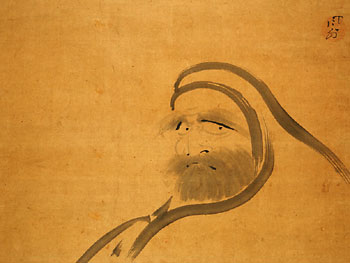
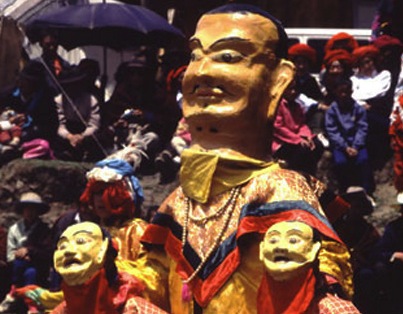
Dancer as Hashang

In the previous post in this series, we looked at the story of the great debate convened by the Tibetan emperor Trisong Detsen. The debate was to decide between the Chinese and Indian versions of Buddhism that were being taught in Tibet at the time. The Indian teachers favoured the scholastic Buddhism that was found in India’s great monastic universities at the time, while Chinese teachers taught mainly meditation in the style they called Chan (later to become Zen in Japan).

The problem with Chan was that it seemed to dismiss what the Indian teachers were presenting as the essentials of Buddhism, that is, virtuous acts and analytical philosophy leading to wisdom. The Chan teachers chracterised the duality of virtue and nonvirtue and the practice of analysis itself as just the kind of thing that gets in the way of real wisdom. All one had to do, they claimed, was stop making distinctions, whether between virtue and nonvirtue, existence and nonexistence, or any dualities at all.

According to Tibetan histories, the Indian side won the debate decisively–understandably enough, as the anti-analytical approach of the Chan teachers was not best suited to the arena of intellectual debate. The King decreed that Tibetan Buddhism was to follow the Indian example, and the Chinese teachers were to return to China. Whether things really happened in this way, Tibetan historians certainly saw this as a decisive moment in Tibet’s religious history, and never failed to tell the story of the debate. Thus even the debate’s loser achieved a lasting fame, or notoriety. Heshang Moheyan (or Hwashang Mahayan to Tibetans) came to be an emblem of a particular kind of erroneous meditation: the idea that all you have to do to achieve enlightenment is shut down all mental activity.

Some Tibetans of a more analytical bent used the Heshang as a polemical stick to beat the meditation traditions that stressed nonconceptual awareness, like Dzogchen and Chagchen. But this was hardly fair, since within even these traditions teachers warned meditators of falling into the extreme of Heshang Moheyan’s blank meditation. Moheyan achieved a long-lasting notoriety in popular culture too, as a figure of fun in ritual dance traditions (as discussed in this recent article).

* * *

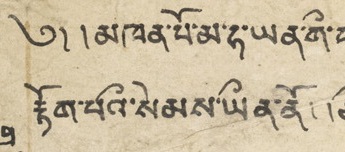
IOL Tib J 468Until recently little was known about the real teachings of Heshang Moheyan except through the Tibetan histories which, written by the spiritual descendants of the winning side of the debate, were unlikely to offer a completely fair representation. Then with the opening of the Dunhuang cave, we suddenly had quite a number of manuscripts apparently written by followers of Tibetan Chan, recording the sayings of Chan masters like Moheyan himself. Great work on piecing together the Dunhuang fragments of Moheyan’s writings has been done by Luis Gomez, and I will look at just one of these manuscripts here, IOL Tib J 468. I want to ask if we can establish whether Moheyan really taught a kind of ‘blank’ meditation, or something a little less extreme. Let’s see.

In his description of meditation, Moheyan writes this:

When you are engaged in contemplation itself, look at your own mind. Then, the lack of any mental activity at all is non-thought. If there is movement of the conceptual mind, be aware of it. “How should one be aware?” Do not analyse the mind which is moving in terms of any kind of quality at all: do not analyse it as moving or not moving; do not analyse it as existing or not exising; do not analyse it as virtuous or non-virtuous; and do not analyse it as defiled or pure. If you are aware of mind in this way, it is natureless. This is the practice of the dharma path.

Well, there is certainly mention here of “the lack of any mental activity.” But the rest of the passage concerns what to do when there is mental “movement”. Interestingly, Moheyan does not suggest suppressing this movement. What he says is: be aware of it without analysing it. What kind of awareness is he talking about? The Tibetan word is tshor, which is used here as a translation for the Chinese character jue 覺 meaning ‘awakening’, ‘illumination’ or ‘awareness’. These words seem a long way from the blankness that Moheyan is supposed to have experienced in his meditation practice. Indeed it seems that he is telling his students here not to suppress mental movement, but to leave it to move in the context of an awareness that does not distinguish it into dualistic extremes.

* * *

Another aspect of Moheyan’s teachings, which I’ll just touch on here, is the fact that he only recommends this technique of meditation to ‘those of sharp faculties’. Others, he says, do need to use various graduated methods. Just what percentage of people he considered to possess these ‘sharp faculties’ is not made clear, but perhaps not so many. In any case, we can see that Moheyan’s teachings were not so radical as they were painted in the later Tibetan tradition. They even seem, dare one say it, quite reasonable…

* * *

References
1. Demieville, Paul. 1952. Le Concile de Lhasa. Paris: Imprimeries Nationale de France.
2. Gomez, Luis. 1983. “The Direct and Gradual Approaches of Zen Master Mahāyāna: Fragments of the Teachings of Moheyan,” in Studies in Ch’an and Hua-yen, edited by Gimello and Gregory: 393–434.
3. Schrempf, Mona. 2006. “Hwa shang at the Border: Transformations of History and Reconstructions of Identity in Modern A mdo.” JIATS 2: 1-32

Tibetan text
IOL Tib J 468: (1v) //bsam gtan nyId du ‘jug pa’I tshe/ bdag gI sems la bltas na/ cI yang sems dpa’ myed de myI bsam mo/ rtog pa’I sems g.yos na tshor bar bya/ cI ltar tshor bar bya zhe na/ gang g.yos pa’I sems de nyId/ g.yos pa dang ma g.yos par yang myI brtag/ yod pa dang myed par yang (2r) myI brtag/ dge ba dang myI dge bar yang myI brtag/ nyong mongs pa dang rnam par byang bar yang myI brtag/ ste// chos thams cad cI lta bur yang myI brtag go// sems g.yos pa de lta bur tshor na rang bzhin myed pa yIn te/ /de nI chos lam spyod pa zhes bya’//

Image
Moheyan in the Rinpung (Rin spungs) ritual dance © 2006 by Mona Schrempf, IATS, and THDL.

Also in this series:
Tibetan Chan I: The Emperor’s Chan
Tibetan Chan III: more teachings of Heshang Moheyan

And an article on a some later Tibetans who supported Moheyan:
The Great Perfection and the Chinese Monk: Nyingmapa Defenses of Hashang Mahāyāna

Tibetan Chan I: The Emperor’s Chan

bodhidharma

Once upon a time, in the old days of Imperial Tibet, foreign Buddhist teachers flocked to Samyé monastery, the centre of the newly emerging Tibetan Buddhism. Indian, Nepalese, Chinese and Central Asian teachers all came to offer their religious wares to the Tibetans. This pleasantly nonpartisan period couldn’t last. By the late 8th century tension developed between the different groups of foreign teachers and their Tibetan disciples, particularly between the Indians and the Chinese. While the Indian teachers taught a graduated path in which the tantric and sutric teachings were carefully laid out as steps to enlightenment, the Chinese taught a method they called Chan (their pronunciation of the Sanskrit dhyāna, meaning “contemplation”). Chan, the forerunner of Japanese Zen, emphasized the result rather than the path, and a straightforward concept-free meditation rather than the multitude of methods offered by the Indian teachers.

When the tension between the Indian and Chinese camps threatened to erupt into violence (in fact, some of the Chan disciples actually wounded themselves in protest and threatened suicide), the Tibetan emperor Trisong Detsen called for the situation to be resolved in a formal debate. The debate would decide which nationality, and which teaching method, would henceforth be supported by the monarchy, and which would be banned from Tibet. The Indian side chose Kamalaśīla, a leading light in scholastic Indian Buddhism and the graduated path. The Chinese side chose a monk known as Moheyan, an influential Chan master from Dunhuang. The debate resulted in a decisive win by the Indian side. The Chan teachers were sent back the China, and Chan was never seen again in Tibet.

That, at least, is the traditional Tibetan story. As is so often the case, the manuscript evidence tells another story. Tibetan Chan is represented in dozens of manuscripts, some of them translations from Chinese Chan, others apparently composed in the Tibetan language. The handwriting and formats of many of these manuscripts suggests that Tibetan Chan continued through to the 10th-century at least. Some manuscripts, like the huge concertina manuscript Pelliot tibétain 116, have been quite thoroughly studied by modern scholars. Others, like the one I want to introduce here, have not.

ITJ709 bsam gtan gi yi ge

The manuscript IOL Tib J 709 is a collection of nine Chan texts, starting off with the teachings of Moheyan himself, and continuing with the words of other Chan masters, including one with the Tibetan name Jangchub Luwang (byang chub klu dbang). Most interesting of all is the very last text in the collection, called The Chan Document (bsam gtan gi yi ge). The first line of this text says that “it appeared under the neck seal of the Divine Emperor Trisong Detsen.” Considering that Chan is supposed to have been banned by this very emperor, what are we to think of this?

Well, we know a little bit about the “neck seal”. Another Dunhuang manuscript (IOL Tib J 506) describes “the neck seal of the Divine Son”, the Divine Son (lha sras) being another title for the emperor. Unlike ordinary seals, which featured a single image, the neck seal contained several images: a mountain, the sun and moon, the ocean, a banner and a swastika (g.yung drung). The name “neck-seal” may indicate that the seal hung round the neck of the emperor, and was therefore only used by the emperor himself. Therefore the suggestion is that The Chan Document (and the very name is suggestive of a royal edict) was written under the personal authority of the king.

ITJ709 mgur gi phyag rgya

So, what can we say about the nature of these Chan teachings that had the approval of the Tibetan emperor?

Like several other Tibetan Chan texts, The Chan Document calls its teachings “the great yoga” or Mahāyoga, which just happens to be the name of a class of tantric scripture and practice that was very popular at Dunhuang. This is really quite strange, and could mean several things. Ken Eastman wrote that these texts must have been written by “members of a Chan lineage who were attempting to disguise their teachings with the name of Mahāyoga.” But this seems unlikely, as there is no other attempt to disguise that these are Chan teachings from China. This particular collection of Chan texts even includes a Tibetan-Chinese glossary of Chan terminology. I have argued, in an article written with Jacob Dalton, that some practitioners in Sino-Tibetan areas like Dunhuang actually combined the techniques of tantric Mahāyoga and Chan. There is evidence for that in certain manuscripts, though not in the one we’re looking at here. Here Mahāyoga, “the great yoga”, really does just seem to be another name for Chan.

One striking thing about the kind of Chan that appears under the king’s approval is that it is not the radical Chan that advocates only one method: non-conceptualization. As it says in the last line, “simultaneously blocking [concepts] with a single antidote will not be helpful.” There seems to have been a debate within Tibetan Chan between those who advocated the single antidote of non-conceptualization and those who employed a variety of practices. Another text in the same collection (IOL Tib J 709/4) states argues that Chan can include many different methods: “While doctors may use various methods depending on the illness, the science [of medicine] remains the same.” This debate reflects the situation within Chinese Chan in the eighth century, when the master Shenhui was attacking the notions of many methods and gradual realization. Over the following centuries the single method and sudden realization became Chan orthodoxy in China and Japan.

So, if The Chan Document really was personally authorised by Trisong Detsen, we can say that he supported the version of Chan that allowed for a variety of methods. This authorized Tibetan Chan would of course be much more open to accepting the Buddhist practices taught by other schools, including the teachers of Indian scholastic Buddhism. It is not the kind of Chan presented by Moheyan in the stories of the Samyé debate, but it is much closer to the Chan taught by the real Moheyan (this we can see from other manuscripts containing Moheyan’s teachings, which have been discussed in the articles by Katsumi and Gomez referenced below).

Even if we accept if that The Chan Document really was personally authorised by Trisong Detsen, some important questions remain. Did Trisong Detsen authorise The Chan Document before or after the Samyé Debate? Or was there really no debate as such, just a series of royal consultations and edicts on what was acceptable or otherwise in the Chan teachings? In any case, The Chan Document may be our most important piece of evidence for the Tibetan emperor’s interest and involvement with the teachings of Chan.

ITJ709 flower


References
1. Eastman, Kenneth M. 1983. “Mahāyoga Texts at Tun-huang” in Bulletin of Institute of Buddhist Cultural Studies (Ryukoku University) 22: 42–60.
1. Gomez, Luis O. 1983.”The Direct and Gradual Approaches of Zen Master Mahāyāna: Fragments of the Teachings of Moheyan” in Gimello, Robert M. and Peter N. Gregory (eds), Studies in Chan and Hua-yen. Honolulu: University of Hawaii Press: 393–434.
2. Katsumi, Okimoto. 1977. “bSam yas no shūron (3), nishu no makaen ibun [The Religious Debate of bSam yas (3), Two Writings by Moheyan]” in Nihon chibetto gakkai kaihō 23: 5–8.
3. Kimura, Ryūtoku. 1976. “Tonkō shutsudo chibetto bun shahon Stein 709 [The Dunhuang Tibetan Manuscript Stein 709]” in Nihon chibetto gakkai kaihō 22: 11-13.
4. Ueyama, Daishun. 1983 “The Study of Tibetan Ch’an Manuscripts Recovered From Tun-huang: A Review of the Field and its Prospects” in Lai, Whalen and Lancaster, Lewis (eds), Early Ch’an in China and Tibet. Berkeley: Berkeley Buddhist Studies Series. 327–349.
5. van Schaik, Sam and Jacob Dalton. 2004. “Where Chan and Tantra Meet: Buddhist Syncretism in Dunhuang” in Susan Whitfield (ed), The Silk Road: Trade, Travel, War and Faith. London: British Library Press. 61–71.

Tibetan sources
Anonymous. Dba bzhed [Accounts of Ba]. In Wangdu, Pasang & Hildegarde Deimberger. Dba’ bzhed: The Royal Narrative concerning the bringing of Buddha’s Doctrine to Tibet. Vienna: Verlag der Österreichischen Akademie der Wissenschaften.

Also in this series:
Tibetan Chan II: the teachings of Heshang Moheyan
Tibetan Chan III: more teachings of Heshang Moheyan

Dharma from the sky II: Indian or Chinese dharma?

Red sky

In the last post we looked at the story of the earliest appearance of the dharma in Tibet. According to the story, a casket fell out of the sky onto the roof (or before the feet) of the early king Lhatotori. What Lhatotori found when he opened the casket differs in the various accounts, but is usually includes a well-known sutra, the Karaṇḍavyūha. This sutra is dedicated to the bodhisattva Avalokiteśvara, the embodiment of compassion in the world, and introduced the six syllable mantra of Avalokiteśvara that was to become so popular in Tibet: Om maṇi padme huṃ (see my earlier post).

The casket is usually also said to include a more obscure text which is known by a strange variety of names. In the later histories, and the canonical versions of the prayer, the name of the prayer is the fully Tibetan Spang skong phyag brgya pa (The 100 Salutations Repairing Breaches). However in earlier histories like Sönam Tsemo’s Introduction to the Dharma, Butön’s Dharma History and the Maṇi Kambum the name of the prayer is Pang kong phyag rgya pa (The Pangkong Mūdras). Here the first two syllables appear not to be Tibetan, but rather approximations of syllables from another language. Some other early histories, including Nyangral Nyima Özer’s Essence of Flowers and the Accounts of Ba give yet another name: Mu tra’i phyag rgya (The Mūdras of the Mūdras!).

The text itself as preserved in the Tibetan canon is a prayer of homage and confession beginning with a hundred and eight homages directed toward a variety of buddhas, dharma texts and objects, and the sangha of bodhisattvas and arhats. It ends with prayers of offering, confession, and aspiration. This is not an unusual sort of text, so why has it been called by so many different names?

IOL Tib J 315

Thankfully we can make sense of this confused situation with the help of the Dunhuang manuscripts, for this prayer seems to have been rather popular before the 11th century. It usually appears in manuscipt collections of prayers that were probably put together for group recitation in monasteries. The fullest title given in the Dunhuang versions is Pam kong brgya rtsa brgyad (IOL Tib J 315.1/4). In other versions it is shortened to Pām kong brgya rtsa (Pelliot tibétain 184) and simply Pang kong (Pelliot tibétain 98).

The first part (pam/pang kong) is certainly a transcription, and it sounds much more like a transcription of a Chinese term than a Sanskrit one. The kong is very likely Chinese gong 供 which in Buddhist Chinese means an act of worship or offering, equivalent to the Sanskrit pūja. I have not found such a clear match for the pam/pang part, but one possibility is ban 昄, meaning ‘extensive’.

The Tibetan part of the title in the Dunhuang manuscript (brgya rtsa brgyad) means ‘one hundred and eight’, which makes perfect sense in that the prayer contains a hundred and eight homages. Therefore the alteration of this in the histories and canonical versions to phyag (b)rgya pa looks like a corruption.

It appears that the other strange version of this title, Mu tra’i phyag rgya (The Mūdras of the Mūdras), was an attempt to make the text seem more Indian and less Chinese by replacing the pang kong part with the Sanskrit word mūdra. But since that word mūdra was just a translation of the (already corrupted) second part of the title, the result was not at all convincing.

The most convincing early title of our text (Pam kong brgya rtsa brgyad) suggests a text either translated from Chinese, or composed in a Sino-Tibetan culture like that of Dunhuang. If we can draw a moral from this little philological enquiry, it may be that the presence of a Chinese text along with more well-known Indian ones in Lhatotori’s casket is emblematic of the mixed sources from which early Tibetan Buddhism was made. While Chinese Buddhist sources never truly featured as importantly as Indian ones, they were there, and China was certainly not spurned as a source of authentic dharma before the 11th century (notwithstanding a certain debate at Samyé), as it often would be later.

See also
Dharma from the Sky I: Legends and history
Dharma from the Sky III: Self-appointed Buddhas

Tibetan sources
1. Anonymous. Dba bzhed [Accounts of Ba]. In Wangdu, Pasang & Hildegarde Deimberger. Dba’ bzhed: The Royal Narrative concerning the bringing of Buddha’s Doctrine to Tibet. Vienna: Verlag der Österreichischen Akademie der Wissenschaften. [p.25]
2. Anonymous. Ma ṇi bka’ ‘bum [Maṇi Kambum]. The Punakha redaction edited by Jamyang Samten. New Delhi, 1975. [vol.I (e), ff.100b.3, 184a.3]
3. Bsod nams rtse mo. Chos la ‘jug pa’i sgo [An Introduction to the Dharma]. In Sa skya bka’ ‘bum. [vol.I, p.50a.6]
4. Bu ston rin chen grub. Chos ‘byung gsun rab rin po che mdzod [History of Buddhism]. Beijing: Khrung go bod kyi shes rig dpe skrun khang. 1988. Translation in Obermiller, E. 1931-2. The history of Buddhism (Chos ḥbyung) by Bu-ston. I The Jewellery of Scripture, II The history of Buddhism in India and Tibet. Heidelberg: O. Harrosovitz. Reprint 1986 New Delhi: Sri Satguru Publications. [p.183]
5. Nyang ral nyi ma ‘od zer. Chos byung me tog snying po sbrang rtsi’i bcud [Essence of Flowers]. In Schuh, Dieter. Die grosse Geschichte des tibetischen Buddhismus nach alter Tradition rÑiṅ ma’i chos byuṅ chen mo. Sankt Augustin: VGH Wissenschaftsverlag. [f.173b.4]

And many thanks…

Blogisattva Awards 2008To the organizers and jurors of the 2008 Blogisattva Awards, who awarded this post and the one that precedes it “Best Multi-Part Blog Post”!