Buddhism and Empire IV: Converting Tibet

How were the Tibetan people converted to Buddhism? And who did the converting?
Tibetan historians always say that the conversion happened during Tibet’s imperial period. Butön, for example, says that that the Tibetans were converted to Buddhism when Songtsen Gampo set down the new royal laws based on the ten virtues of Buddhism. Other histories consider the real conversion to have been carried out a century later by the trio of Trisong Detsen (the emperor), Śāntarakṣita (the monk) and Padmasambhava (the tantric adept).
But sources that can be dated back to the time of the Tibetan emperors are not so clear about this, which has lead some modern scholars to argue that Buddhism at the time of the Tibetan Empire was a religion of the nobility, only found at the Tibetan court (see the comments to the previous post). Modern scholars have also argued that the adoption of Buddhism by Trisong Detsen and his successors was an act of international diplomacy. Buddhism, after all, was an international religion and many other major powers of the period — the Chinese empire, Central Asian city-states and Indian kingdoms — were Buddhist.
Then it would hardly have mattered whether the majority of ordinary Tibetans were Buddhists or not. The point was that Tibet should be perceived as a Buddhist country. So most Tibetans would have had little or no experience of Buddhism in the imperial period.
But was this really the case?
* * *
I’ve recently been looking at some of the early records of the Tibetan tsenpos to see whether any of them expressed the aspiration to convert the Tibetan people in general, and not just the nobility.
The second edict of Trisong Detsen (dated to 779 by Hugh Richardson) records the way in which Buddhism was made the state religion of Tibet. Looking very much like the official minutes of a meeting, it describes various discussion during which the court deliberated on how to establish Buddhism in Tibet, beginning with Trisong Detsen’s own account of how he was converted to Buddhism:
Then with the help of teachers of virtue I listened to the dharma was studied and the texts were brought before my eyes. Then I deliberated upon how the Buddhist religion should be practised and spread.
So, by his own account Trisong Detsen did want to spread Buddhism in Tibet. Along with that, he had some harsh things to say about the old religion:
At that time it was declared that those who followed the old Tibetan religion were getting everything wrong…
Among the old practices he disapproved of are painting your body red, casting spells on the government, and causing diseases and famine. Later the tsenpo convened another meeting, this time with lords from all over the Tibetan empire:
The minor princes under our dominion such as the Azha ruler, and the outer and inner ministers were consulted and a council was held. Together they considered in brief these things, first that trust should be put in the word of the Buddha; secondly that the example of the ancestors should be followed; and thirdly that help should be given by the power of the teachers of virtue.
So at this meeting everyone agreed to an empire-wide project establishing Buddhism, with a caveat that the traditional ways of the ancestors should be followed as well.
Further to that, a council was held about how the right path should not be changed, and how it could be increased. Thus an excellent summary of the dharma was made
What was this summary of the dharma? Earlier in the edict, Trisong Detsen explains the basics of Buddhism as the fact of impermanence, the inevitability of cause and effect (i.e. karma) and the need to practice the ten kinds of virtuous action in order to obtain a good rebirth. So the summary agreed at this meeting was probably something along those lines.
* * *
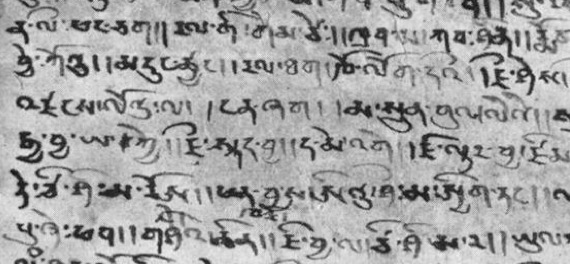
But Trisong Detsen’s recorded aspiration to spread the word of the Buddha has little to say about ordinary Tibetans. Let’s skip forward to the reign of Senaleg, in the early years of the 9th century. One of his edicts was preserved on the Karchung pillar, which survived almost undamaged right through to the Cultural Revolution, when it was smashed to pieces. This pillar edict is concerned with the appointment of senior Buddhist teachers to lead the religion in Tibet. It says:
But from the time when the tsenpo and his descendents are young until the time when they become rulers of the kingdom and thereafter, teachers of virtue shall be appointed from among the monks. By teaching religion as much as can be absorbed into the mind, the gate of liberation for the whole of Tibet, through the learning and practice of the dharma, shall not be closed.
Note here the apparently inclusive statement that “the whole of Tibet” will have access to the “gate of liberation.” This egalitarian sentiment is made even more clear further down the pillar:
And when for the Tibetan subjects from the nobles downwards, the gate leading to liberation is never obstructed and the faithful have been led towards liberation, from those among them who are capable there shall always be appointed abbots to carry on the teachings of the Buddha.
It seems clear enough that the phrase “from the nobles downwards” must include every Tibetan subject, however lowly.
* * *
Noble sentiments indeed, but how could such a project realistically be carried out? How do you convert a whole people to another religion? This is a big question, and I won’t try to answer it. In any case, as Matthew Kapstein has pointed out, this “conversion” took place over several centuries (or to put it another way, there were several “conversions”).
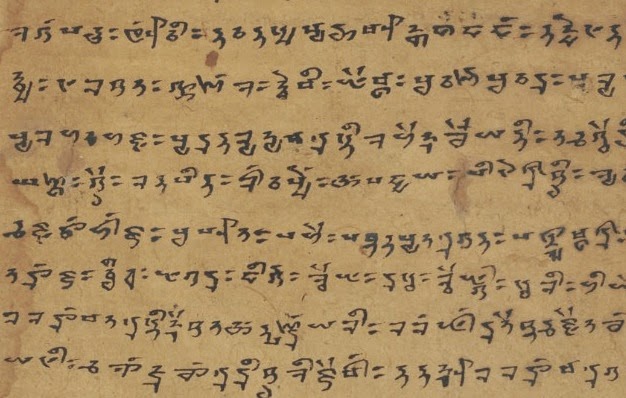
But if we travel now back to Dunhuang, from our little excursion to Central Tibet, there is a piece of evidence that might hint at how the grand project of converting the Tibetans to Buddhism was put into practice. There’s a scroll with a short summary of Buddhism in Chinese, called A Summary of the Essential Points of the Mahāyāna Sūtras. Its colophon says (in Chinese):
At the sixth month of the water tiger year, send the letter with tsenpo’s seal of Great Tibet and the Sūtra of Ten Kinds of Virtuous Behaviour to every county, to be circulated and recited. On the 16th day of the latter eighth month this copy was made.
This scroll has been dated to 822, in the reign of the last great Buddhist Tibetan emperor, Ralpachen. I am tempted to join up the dots here from (1) the summary of the dharma made by Trisong Detsen’s council and agreed by all the local rulers of the Tibetan empire, (2) the aspiration firmly expressed by the edict of Senaleg that all Tibetans should have access to Buddhism, and (3) the order from Ralpachen’s court to send copies of a summary of the ten Buddhist virtues to every part of the realm.
Many questions remain (you might be asking yourself some already, if you made it this far). But I think we can glimpse a genuine aspiration expressed by the Tibetan emperors to bring Buddhism to all of the Tibetan people, high and low. And we can see one way this might have been carried out, by the copying of brief summaries of the dharma all over Tibet (which would then have been taught orally to the non-literate, presumably, though literacy seems to have been quite widespread by the end of the empire). This might have been enough to initiate at least the first stage in the conversion of the Tibetan people to Buddhism.
* * *
References
The pillar inscriptions quoted here are all to be found in the collections of Hugh Richardson (1985), Fang Kuei Li and W. South Coblin (1987) and now the volume edited by Kazushi Iwao and Nathan Hill and recently published by the Old Tibetan Documents Online Group (2009). The translations in this post are my own “provisional” ones.
The scroll mentioned here (Or.8210/S.3996) has been studied by Daishun Ueyama (1995: 314-323). The Chinese title is Da cheng jing zuan yao yi 大 乘 經 纂 要 義.
The issue of the conversion of the Tibetans has been treated from several different angles in Matthew Kapstein’s The Tibetan Assimilation of Buddhism (Oxford University Press, 2000).
I’m also looking forward to reading the just-published Buddhism and Empire: The Political and Religious Culture of Early Tibet by Michael Walter (Brill).
Images
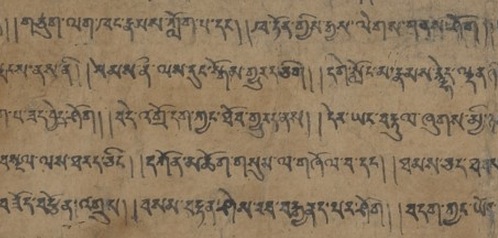
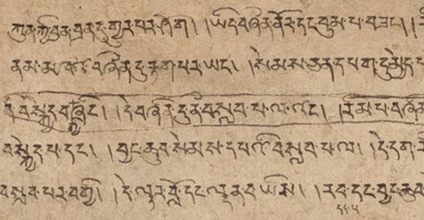
The first two images are by Hugh Richardson, showing his Tibetan assistant taking rubbings from the Karchung (skar cung) pillar. The photos are (c) The Pitt Rivers Museum, Oxford, and can be seen, along with many others, at the wonderful Tibet Album website.
The scroll is Or.8210/S.553, another copy of the Summary of the Essential Points of the Mahāyāna Sūtras.
* * *
Tibetan
The second edict of Khri srong lde btsan (from Hugh Richardson, “The First Tibetan Chos ‘byung” in High Peaks, Pure Earth):
(p.97; 110b) de nas dge ba’i bshes gnyen gyis bstangs te chos kyang gsan / yi ge yang spyan sngar brims nas / sangs rgyas kyi chos spel zhing mdzad par bsgroms so / / de na bod kyi chos rnying pa ma lags la / sku lha gsol ba dang cho ga myi mthun pas / kun kyang ma legs su dogs te /
(p.98; 110b) ‘bangs su mnga’ ba rgyal ba rgyal phran ‘a zha rje la bstsogs pa dang phyi nang gi blon po rnams la bka’s rmas / bka’ gros su mdzad nas / gcig tu na sangs rgyas bcom ldan ‘das kyi bka’ lung la bsten / gnyis su na yab mes kyi dpe lugs la ‘tshal / gsum du na dge ba’i shes gnyen gyi mthus bstangs pa dang yang sbyar nas mdor brtags na / … de lam legs par ni ji ltar myi ‘gyur ched ni ji ltar che zhe na / chos kyi mdo ni legs su bgyi bas /
The Skar cung pillar inscription:
(ll.33–42): / / btsan po dbon sras / / sku chu ngur bzhugs pa yan cad / / chab srId kyi mnga’ bdag mdzad pa man chad kyang / / dge slong las / dge ba’I bshes nyen bskos ste / chos thugs su cI chud chud du bslab cing / / bod yongs kyIs kyang chos slob cing spyad pa’I sgo myi gcad / nam du yang bod ya rabs man cad/ bod ‘bangs las thar par gzud pa’I sgo myi bgag par / dad pa’I rnams las thar par btsud de / / de’i nang nas nus pa las / / bcom ldan ‘das kyI ring lugs rtag du bsko zhIng / / bcom ldan ‘das kyI ring lugs byed pa’I rnams chos ‘khor nas bya’o cog gI bka’ la yang btags ste / /
3 comments July 1, 2009
The Decline of Buddhism V: A prayer for the dark age

I’m a little worried that I might have suggested in previous installments of this “Decline of Buddhism” series that the downfall of the Tibetan empire was a direct result of the assassination of the Tibet emperor Lang Darma. This may be true in a sense, but many Tibetan historians (and most modern ones) see this as just one stage in a series of unfortunate events. The next stage was the division of the empire between two disputed successors. Almost every previous succession to the Tibetan imperial throne had been disputed, but one side had always come out on top. This time neither side was strong enough to subdue the other, and so the country was split in two.
The next stage of disintegration was a series of uprisings (the Tibetan word is kheng log) against the prevailing authorities, setting Tibetan clan against clan. The first of these uprisings happened just around the corner from Dunhuang, the home of our manuscripts.
While Tibet was splitting in two in the mid-ninth century, a civil war broke out in the Gansu region, near the border with China. An aristocrat from the Ba clan called Khozher gathered his own army and set himself up as a local warlord. He spurned the authority of the local Tibetan governor, claiming that the governor’s clan (the Dro) had orchestrated the murder of Lang Darma, and that it was his duty to take revenge on such rebels.
Khozher also portrayed himself as a kind of nationalist, fighting against the resurgent Chinese forces in the area, but in his brutality (he had every male in the whole region put to the sword) he left little hope of a better alternative. The people turned against him, and most of his army deserted.
The incorrigible Khozher set out for China, boasting that we would return with hundreds of thousands of Chinese soldiers. But when he offered his submission to the Chinese emperor in return for an imperial post, he was rejected. Khozher was finally ousted when the a local Chinese warlord swept through Gansu province. Though no longer a force to be reckoned with, he continued to cause trouble, and when he was eventually, and inevitably, put to the sword, his severed head was taken to Chang’an as proof that this troublesome warlord was finally dead.
Such was the first uprising, and the end of Tibetan rule in Gansu.
* * *
All of which brings us to another prayer for Tibet…
Recently we looked at a prayer for the protection of Tibet that seemed to date back to the Tibetan imperial period. This time let’s look at a prayer that seems (to me) to date from the troubled period of the uprisings and the ‘dark age’ that followed.
This prayer is actually part of a Vajrayāna empowerment ritual (IOL Tib J 752). That in itself suggests that it probably comes from the tenth century, when most, if not all, of the tantric manuscripts at Dunhuang were written. This time, instead of a prayer to eliminate the opponents to Tibet, we have a prayer to pacify the troubles within Tibet itself. “Please bring peace swiftly,” is the plea, “to the conflicts in the kingdom of Tibet.” The key word here is “conflicts”, which is khrug pa in Tibetan, defined in various dictionaries as a fight, dispute or conflict, and particularly in the Great Treasury of Words, as “a mixing up of the established order”. This is, I think, comparable to the idea of “uprisings” (kheng log).
So here are the tantric practitioners at Dunhuang, surrounded by clan-on-clan violence, praying for peace (and failing that, a firm helmet):
Please bring peace swiftly to the conflicts in the kingdom of Tibet. And then please grant long life and a firm helmet to a king who protects the dharma. As for the enemies who threaten us (such as the enemies of the Vajrayāna and those who obstruct the virtuous ones gathered here in our maṇḍala, and all of those who harbour poisonous thoughts), please subdue them with the appropriate one of the four enlightened activities…
* * *
See also:
The Decline of Buddhism I: Was Lang Darma a Buddhist?
The Decline of Buddhism II: Did Lang Darma persecute Buddhism?
The Decline of Buddhism III: Why should the secret mantra be kept secret?
The Decline of Buddhism IV: Keepers of the flame
And here you can read about a prayer for peace in Tibet in troubled times a thousand or so years later.
Tibetan text
IOL Tib J 752, verso: /bod rgyal khams khrug pa yang myur du zhI nas//chos skyong ba’i sgyal po sku tshe ring dbu rmog brtsan bar gyur cIg//gzhan [yang] rdo rje theg pa’i dgra bgegs su gyur pa dang//bdag cag gI dkyIl ‘khor ‘dir ‘dus pa’I dge ba’I bar cad byed pa la bstsogs pa//gnon gyI dgra bgegs su gyur ba//gdug pa’i bsam pa can cI mchis pa thams cad/ /’phags pa’I sa ‘phrin las rnam bzhi gang gIs ‘dul ba bzhin du/ /’dul skal du bzhes nas zhIng zhing zlog gyur cig mdzad du gsol …
* Note that calling Tibet a “kingdom” (rgyal khams) is not unprecedented, and we also find the same phrase bod rgyal khams in the prayers for the Dega Yutsal monastery (PT 16). The phrase that is translated here as “a firm helmet” (dbu dmog brtsan) also appears frequently in PT 16, as well as in some of the pillar and rock inscriptions from Central Tibet. It has powerful resonances of the divine right of the Tibetan tsenpos, difficult to communicate in translation. I detect in this prayer a hope that the tradition of the Buddhist tsenpos will be revived by some unnamed king.
References
On the uprisings in general see:
- Vitali, Roberto. 1996. The Kingdoms of Gu.ge Pu.hrang: According to mNga’.ris rgyal.rabs by Gu.ge mkhan.chen Ngag.dbang grags.pa. Dharamsala: Tho.ling gtsug.lag.khang lo.gcig.stong ‘khor.ba’i rjes.dran.mdzad sgo’i go.sgrig tshogs.chung.
- Roberto Vitali. 2004. “The role of clan power in the establishment of religion (from the kheng log of the 9-10 century to the instances of the dByil of La stod and gNyos of Kha rag).” In The Relationship between Religion and State : (chos srid zung ‘brel), in Traditional Tibet, edited by Christoph Cuppers. Nepal, Lumbini International Research Institute.
On the conflicts near Dunhuang, see:
- Petech, Luciano. 1983. “Tibetan Relations with Sung China and the Mongols.” In China Among Equals: The Middle Kingdom and its Neighbours, 10th–14th Centuries, edited by Morris Rossabi. Berkeley and Los Angeles: University of California Press: 173–203.
- Iwasaki Tsutomu. 1993. “The Tibetan Tribes of Ho-hsi and Buddhism during the Northern Sung Period”. Acta Asiatica 64: 17–37.
And for a nice account of both see Chapter 2 of:
- Ronald Davidson. 2005. Tibetan Renaissance: Tantric Buddhism in the Rebirth of Tibetan Culture. New York: Columbia University Press. [pp.67-68]
6 comments June 12, 2009
A Prayer for Tibet

A Mystery
So, there’s this manuscript from Dunhuang with a prayer for the protection of Tibet. That was the first thing to pique my interest. Prayers and rituals for protecting Tibet from foreign invasions are common enough from the time the Mongols were sending armies into Tibet in the 13th century. Rituals to repel enemy armies were usually performed by tantric practioners from the Nyingma school, like the famous Sokdokpa, whose name in fact means “Mongol-Repeller”. But this prayer is much earlier than those.
Unlike those Mongol-repelling rituals, this Dunhuang prayer is not very tantric. It does invoke local protectors and spirits, but no tantric Buddhist deities. It was written, according to the colophon, by a certain Bandé Paltsek, who I am inclined to identify with the famous translator Kawa Paltsek. There’s nothing in the prayer to suggest that it couldn’t have been written by Paltsek during the late eighth or early ninth century.
So that’s interesting too. But here’s the really intriguing thing: every time the word “Tibet” (bod khams) appears in this manuscript, it has been defaced. And not just randomly but in a rather specific way. The “o” in bod has been rubbed out, and various bits of khams have been rubbed away, but never the whole word.
I have been puzzled by this strange defacement for a while, and I still can’t find a satisfactory answer for it. I do think it was done before the closing of the cave in the early 11th century (though this could also be debated). Is this censorship? Was the idea of “Tibet” troublesome to an ancient reader of the manuscript? That reader could well have been one of the local Chinese who helped to oust the Tibetans from Dunhuang in 848, or a later descendent.
Then again, perhaps the reader was not quite so sensitive as to be offended by the very word “Tibet” but feared the power of the prayer, or the talismanic force of the manuscript containing the prayer. Taking out bits of the word “Tibet” might confuse the great beings invoked in the prayer, who would no longer know who they were supposed to be protecting.
Or was the reason less hostile than I am supposing? Perhaps the reader only meant to amend the manuscript. One of the regions near Dunhuang was known as Dekham (bde khams). Taking the “o” out of bod and replacing it with an “e” would give us this name. This could be an unfinished attempt to direct the prayer to a local region, perhaps after the fall of the Tibetan empire and a unified “Tibet”. But if so, why did the reader also deface khams, which could just be left as it is?
No, I am not quite convinced by any of these solutions, and so dear reader, I leave the question open to you. And here, restored and rendered imperfectly into English, is Paltsek’s prayer for the protection of Tibet.
* * *
A Prayer for Tibet
Conquerors and your entourage – in order to expel Tibet’s obstacles, please come to this heavenly mansion. By the power of the Teacher’s blessings and compassion and our own faith, supreme divine substances sufficient to fill the sky are presented in their fullness. By the power of the qualities of the Sugatas and our own virtue, please pacify this region, and clear away Tibet’s obstacles.
The offering to the bodhisattvas on the Very Joyous and Stainless levels and the others – please protect us with your great power. By our presenting these unsurpassed offerings, oh sons and your sublime entourage, please consider your commitment to obey. By the compassion and blessings of the Noble Ones, please clear away Tibet’s obstacles.
The offerings for the Noble Arhats: The Mahāsthavira retinue, Bharadvāja and the others – please protect us with your great power. By our presenting these unsurpassed offerings, oh great ones worthy of offerings, please consider your commitment to obey. By the compassion and blessings of the Noble Ones, please clear away Tibet’s obstacles.
The offerings for the gods of the form realms: from the great king Brahma to the gods of the Brahma heaven – please protect us with your great power. By our presenting these unsurpassed offerings, oh gods of the Brahma heaven, please consider your commitment to obey. By your compassion and blessings please clear away Tibet’s obstacles.
The offerings to the gods of the desire realm: from the great gods of Paranirmitavaśavartin to the lord of the gods Indra – please protect us with your great power. By our presenting these unsurpassed offerings, oh gods of the desire realm, please consider your commitment to obey. By your compassion and blessings please clear away Tibet’s obstacles.
The offerings to the four great kings: Dhṛtarāṣṭa and the others – please protect us with your great power. By our presenting these unsurpassed offerings, oh four great kings and your entourage, please consider your commitment to obey. By your compassion and blessings please clear away Tibet’s obstacles.
The offerings to the ten local protectors: Wangpo Dorjé and the rest – please protect us with your great power. By our presenting these unsurpassed offerings, oh guardians and your entourage, please consider your commitment to obey. By your compassion and blessings please clear away Tibet’s obstacles.
The offerings to the nāgas: the eight classes of nāgas and so on – please protect us with your great power. By our presenting these unsurpassed offerings, oh eight classes of nāgas and your entourage, please consider your commitment to obey. By your compassion and blessings please clear away Tibet’s obstacles.
The offerings to the protectors of the temple: those who guard the stūpas of Jambudvīpa – Pāñcika and so on – please protect us with your great power. By our presenting these unsurpassed offerings, oh protectors and your entourage, please consider your commitment to obey. By your compassion and blessings please clear away Tibet’s obstacles.
The offerings to the spirits (jungpo) of the ten directions – the king of the spirits, lord of the demons (dön), and the entourage of demons of the intermediate directions – please protect us with your great power. By our presenting these unsurpassed offerings, oh spirits and your entourage, please consider your commitment to obey. By your compassion and blessings please clear away Tibet’s obstacles.
The chapter summarizing the offerings is complete. It is Bandé Paltsek’s chapter on offerings.
* * *
A note on the name of Tibet
Here I have taken bod khams to mean “Tibet” in general. Another early example of this is seen in the prayers for the founding of the Dega Yutsal temple (PT 16, 33r4; note that here the happiness of Tibet is down to the king and ministers, not the Buddhas and deities). Thus I take bod khams to mean something like “the realm of Tibet” in the same way as bod yul does later. But I have seen it suggested that these are really two words, bod meaning central Tibet and khams meaning, well, Kham, eastern Tibet. In which case we should translate the term as “central and eastern Tibet”. I’m not sure where that leaves western Tibet, however, and I am still happy to assume that bod khams is just “Tibet”.
* * *
References
1. On the attempts to repel the Mongol menace with magic in the 13th century, see Luciano Petech’s Central Tibet and the Mongols (Rome: Is.M.E.O., 1990), pages 13, 17, 18.
2. On the prayers for Dega Yutsel, see Matthew Kapstein’s recent article “The Treaty Temple of the Turquoise Grove, in Buddhism Between Tibet and China (ed. Matthew Kapstein, Boston: Wisdom, 2009).
* * *
Tibetan Text (IOL Tib J 374)
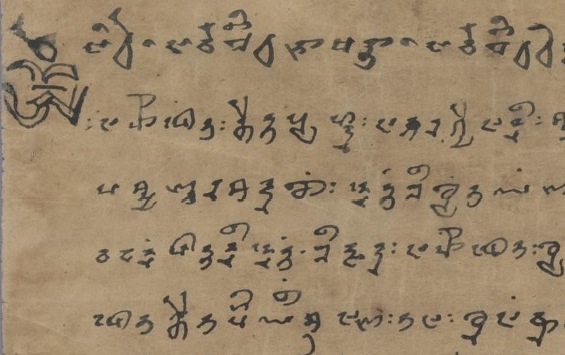
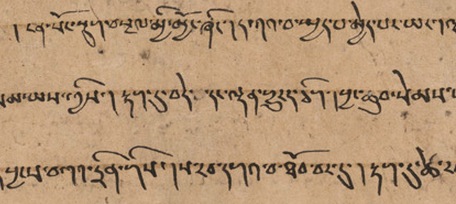
The manuscript in question comprises a mere three folios, numbered 1 (gcig) to 3 (gsum). It’s not yet been digitized, I’m afraid, hence my own fuzzy photographs above. Initially, I thought the pages of the prayer were both scrambled and incomplete. Then I realized that the only problem was that the prayer was followed in the manuscript by another short (and this time, certainly tantric) prayer. The last folio has the end of our prayer on one side, and the short tantric prayer on the other, but unlike the other folios, it has been numbered on the verso, so that it looks like the little tantric prayer is on the recto, not the verso. If we just turn over this last folio, then everything falls into place nicely. Though it does seem to be incomplete at the beginning (the first page begins with the syllables dgongs shig, which look like the end of a verse), we can’t be missing much, as it begins with the offering to the buddhas themselves, surely the top of the hierarchy of protectors invoked here. The haphazard numbered of the manuscript seems to have been done by a later reader, perhaps the same person responsible for the defacement.
$/ /dgongs shIg//rgyal ba’I ‘khor bcas rnams//b[o]d kh[ams] kyi ni bgegs gzhil phyir//gzal yas khang ‘dIr gshegs su gsol//ston pa’I thugs rje byin rlabs dang//bdag cag gi ni dad pa’I mthus//nam ka ‘i mtha’ dag ma lus par//lha rdzas mchog gis bkang ste mchod//bder gshegs che ba’I yon tan dang//bdag cag gi ni dge ba’I mthus//yul phyogs su ni zhI ba dang//b[o]d khams bgegs rnams bsal du gsol//
byang chub sems dpa’ rnams la mchod pa’//rab dag [=dga'] drI myed la bstsogs/pa’//rab tu mthu’ brten bskyabs gsol te//bla myed mchod pa ‘dI phul bas//sras kyIs dam pa’I ‘khor bcas kyis//stun kyi dam tshIgs rje dgongs ste//’phags pa’I thugs rje byin rlabs gyIs//b[o]d khams bgegs rnams bsal du gsol//
‘phags pa dgra bcom ba rnams la mchod pa’//gnas brtan chen po ‘khor bcas ste//ba ra dwa tsa las btsogs la//rab tu bthu’ brten bskyabs gsol ste//bla myed mchod pa ‘di phul bas//sbyIn gnas chen po ‘khor bcas kyIs//stun kyi dam tshIgs rje dgongs/ste/’phags pa’I thugs rje byin rlabs kyis//b[o]d [khams] bgegs rnams gzhIl du gsol//
gzugs khams kyi lha rnams la mchod pa’//tshangs pa’I rgyal po chen po nas//tshangs rIs kyIs ni lha rnams la//rab tu bthu’ brten bskyabs gsol ste//bla myed mchod ‘dI phul bas tshang rIs kyi ni lha rnams kyIs//stun kyi dam tshigs rje dgongs zhing khyed kyI thugs rje byin rlabs kyis//b[o]d [khams] bgegs rnams bsal du gsol//
‘dod khams kyI lha rnams la mchod pa’//gzhan ‘phrul dbang gi lha chen nas//brgya ‘byin lha’I bdang po la//rab tu bthu’ brten bskyabs gsol ste//bla myed mchod pa ‘dI phul bas//’dod khams kyi ni lha rnams kyis//stun kyI dam tshIgs brje dgongs ste//khyed kyi thugs rje byin rla[b]s kyis//b[o]d [kham]s bgegs rnams bsal du gsol//
rgyal chen rIgs bzhI la mchod pa’//yul ‘khor srung nI las bstsogs la//rab tu mthu’ brten bskya+bs+ gsol ste// +bla myed ched pa ‘di phul bas//+ rgyal chen rIgs zhI ‘khor bcas kyIs//stun kyI dam tshigs rje dgongs shing//khyed kyi thugs rje byi[n] rla+b+s kyIs//b[o]d khams bgegs rnams bsal du gsol//
phyogs skyong bcu la mchod//dbang po rdo rje las stsogs la//rab tu mthu’ brten skyabs gsol ste//bla myed pa ‘dI ‘bul bas//mgon po ‘khor bcas thams cad gyIs//stun gyI dam tshIgs rje dgongs ste//khyed gyI thugs rje byIn rlabs gyIs//b[o]d [khams] bgegs rnams bsal du gsol//
lha klu sde brgyad la mcho+d+ pa’//lha klu sde brgyad las btsogs la//rab tu mthu’ brten skyabs gsol ste//bla mted mchod ‘dI ‘bul bas//lha klu sde brgyad ‘khor bcas gyis//stun dam tshIgs rje dgongs ste//khyed gyi thugs rje byin rlabs gyis//b[o]d khams bgegs rnams bsal du gsol//
gtsug lag khang gI srungs ma la mchod pa’//’dzam gling mchod brten bsrungs mdzad cIng//span tsa ka ni las btsogs la//rab tu mthu’ brten//skyabs gsol ste//bla myed mchod pa ‘dI phul pas//srungs ma ‘khor bcas thams cad gyis//stun gyi dam tshigs rje dgong ste//khyed gyi thugs rje byin rlabs gyis//b[o]d [khams] bgegs rnams bsal du gsol//
phyogs bcu ‘byung po rnams la mchod pa’//’byung po rgyal po gdon gyi bdag//phyogs mtshams gdon gyi tshogs bcas la//rab tu mthu’ brten skyabs gsol ste//bla myed mchod pa ‘di phul bas//’byung po ‘khor bcas thams cad gyis//stun gyi dam tshigs rje dgongs zhIng khyed gyI thugs rje byin rlabs gyIs bdag cad gi bsam sgrub mdzad//
//$//mchod pa bsdus pa’I le’u rdzogs s+ho//dge slong dpal brtsegs gyi mchod pa’I le’u lags+ho//://:
9 comments May 22, 2009