
A Mystery
So, there’s this manuscript from Dunhuang with a prayer for the protection of Tibet. That was the first thing to pique my interest. Prayers and rituals for protecting Tibet from foreign invasions are common enough from the time the Mongols were sending armies into Tibet in the 13th century. Rituals to repel enemy armies were usually performed by tantric practioners from the Nyingma school, like the famous Sokdokpa, whose name in fact means “Mongol-Repeller”. But this prayer is much earlier than those.
 Unlike those Mongol-repelling rituals, this Dunhuang prayer is not very tantric. It does invoke local protectors and spirits, but no tantric Buddhist deities. It was written, according to the colophon, by a certain Bandé Paltsek, who I am inclined to identify with the famous translator Kawa Paltsek. There’s nothing in the prayer to suggest that it couldn’t have been written by Paltsek during the late eighth or early ninth century.
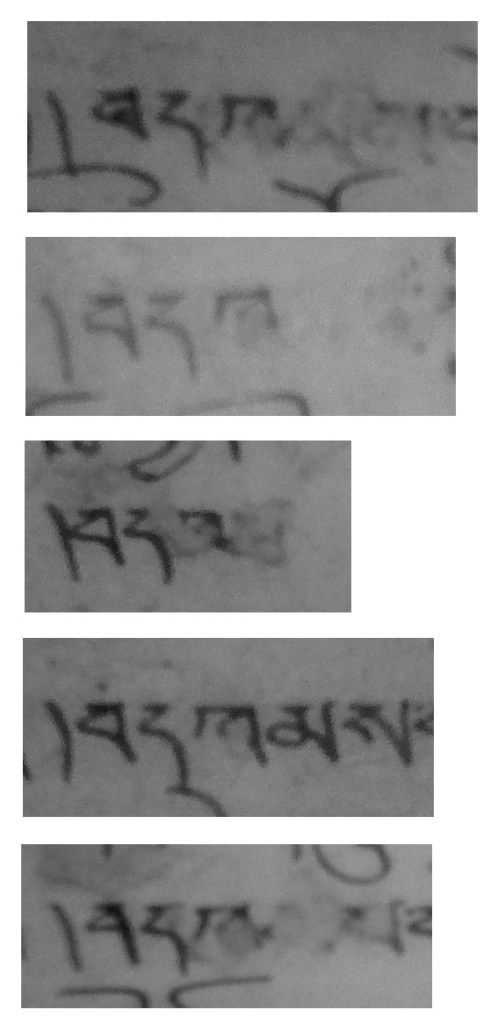
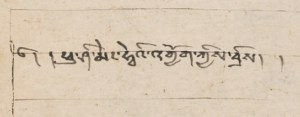
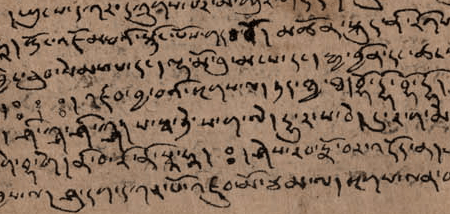
So that’s interesting too. But here’s the really intriguing thing: every time the word “Tibet” (bod khams) appears in this manuscript, it has been defaced. And not just randomly but in a rather specific way. The “o” in bod has been rubbed out, and various bits of khams have been rubbed away, but never the whole word.
I have been puzzled by this strange defacement for a while, and I still can’t find a satisfactory answer for it. I do think it was done before the closing of the cave in the early 11th century (though this could also be debated). Is this censorship? Was the idea of “Tibet” troublesome to an ancient reader of the manuscript? That reader could well have been one of the local Chinese who helped to oust the Tibetans from Dunhuang in 848, or a later descendent.
Then again, perhaps the reader was not quite so sensitive as to be offended by the very word “Tibet” but feared the power of the prayer, or the talismanic force of the manuscript containing the prayer. Taking out bits of the word “Tibet” might confuse the great beings invoked in the prayer, who would no longer know who they were supposed to be protecting.
Or was the reason less hostile than I am supposing? Perhaps the reader only meant to amend the manuscript. One of the regions near Dunhuang was known as Dekham (bde khams). Taking the “o” out of bod and replacing it with an “e” would give us this name. This could be an unfinished attempt to direct the prayer to a local region, perhaps after the fall of the Tibetan empire and a unified “Tibet”. But if so, why did the reader also deface khams, which could just be left as it is?
No, I am not quite convinced by any of these solutions, and so dear reader, I leave the question open to you. And here, restored and rendered imperfectly into English, is Paltsek’s prayer for the protection of Tibet.
* * *
A Prayer for Tibet
Conquerors and your entourage – in order to expel Tibet’s obstacles, please come to this heavenly mansion. By the power of the Teacher’s blessings and compassion and our own faith, supreme divine substances sufficient to fill the sky are presented in their fullness. By the power of the qualities of the Sugatas and our own virtue, please pacify this region, and clear away Tibet’s obstacles.
The offering to the bodhisattvas on the Very Joyous and Stainless levels and the others – please protect us with your great power. By our presenting these unsurpassed offerings, oh sons and your sublime entourage, please consider your commitment to obey. By the compassion and blessings of the Noble Ones, please clear away Tibet’s obstacles.
The offerings for the Noble Arhats: The Mahāsthavira retinue, Bharadvāja and the others – please protect us with your great power. By our presenting these unsurpassed offerings, oh great ones worthy of offerings, please consider your commitment to obey. By the compassion and blessings of the Noble Ones, please clear away Tibet’s obstacles.
The offerings for the gods of the form realms: from the great king Brahma to the gods of the Brahma heaven – please protect us with your great power. By our presenting these unsurpassed offerings, oh gods of the Brahma heaven, please consider your commitment to obey. By your compassion and blessings please clear away Tibet’s obstacles.
The offerings to the gods of the desire realm: from the great gods of Paranirmitavaśavartin to the lord of the gods Indra – please protect us with your great power. By our presenting these unsurpassed offerings, oh gods of the desire realm, please consider your commitment to obey. By your compassion and blessings please clear away Tibet’s obstacles.
The offerings to the four great kings: Dhṛtarāṣṭa and the others – please protect us with your great power. By our presenting these unsurpassed offerings, oh four great kings and your entourage, please consider your commitment to obey. By your compassion and blessings please clear away Tibet’s obstacles.
The offerings to the ten local protectors: Wangpo Dorjé and the rest – please protect us with your great power. By our presenting these unsurpassed offerings, oh guardians and your entourage, please consider your commitment to obey. By your compassion and blessings please clear away Tibet’s obstacles.
The offerings to the nāgas: the eight classes of nāgas and so on – please protect us with your great power. By our presenting these unsurpassed offerings, oh eight classes of nāgas and your entourage, please consider your commitment to obey. By your compassion and blessings please clear away Tibet’s obstacles.
The offerings to the protectors of the temple: those who guard the stūpas of Jambudvīpa – Pāñcika and so on – please protect us with your great power. By our presenting these unsurpassed offerings, oh protectors and your entourage, please consider your commitment to obey. By your compassion and blessings please clear away Tibet’s obstacles.
The offerings to the spirits (jungpo) of the ten directions – the king of the spirits, lord of the demons (dön), and the entourage of demons of the intermediate directions – please protect us with your great power. By our presenting these unsurpassed offerings, oh spirits and your entourage, please consider your commitment to obey. By your compassion and blessings please clear away Tibet’s obstacles.
The chapter summarizing the offerings is complete. It is Bandé Paltsek’s chapter on offerings.
* * *
A note on the name of Tibet
Here I have taken bod khams to mean “Tibet” in general. Another early example of this is seen in the prayers for the founding of the Dega Yutsal temple (PT 16, 33r4; note that here the happiness of Tibet is down to the king and ministers, not the Buddhas and deities). Thus I take bod khams to mean something like “the realm of Tibet” in the same way as bod yul does later. But I have seen it suggested that these are really two words, bod meaning central Tibet and khams meaning, well, Kham, eastern Tibet. In which case we should translate the term as “central and eastern Tibet”. I’m not sure where that leaves western Tibet, however, and I am still happy to assume that bod khams is just “Tibet”.
* * *
References
1. On the attempts to repel the Mongol menace with magic in the 13th century, see Luciano Petech’s Central Tibet and the Mongols (Rome: Is.M.E.O., 1990), pages 13, 17, 18.
2. On the prayers for Dega Yutsel, see Matthew Kapstein’s recent article “The Treaty Temple of the Turquoise Grove, in Buddhism Between Tibet and China (ed. Matthew Kapstein, Boston: Wisdom, 2009).
* * *
Tibetan Text (IOL Tib J 374)
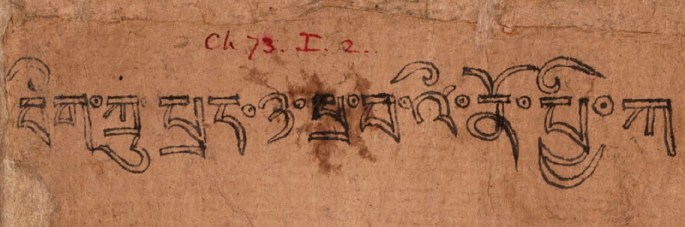
The manuscript in question comprises a mere three folios, numbered 1 (gcig) to 3 (gsum). It’s not yet been digitized, I’m afraid, hence my own fuzzy photographs above. Initially, I thought the pages of the prayer were both scrambled and incomplete. Then I realized that the only problem was that the prayer was followed in the manuscript by another short (and this time, certainly tantric) prayer. The last folio has the end of our prayer on one side, and the short tantric prayer on the other, but unlike the other folios, it has been numbered on the verso, so that it looks like the little tantric prayer is on the recto, not the verso. If we just turn over this last folio, then everything falls into place nicely. Though it does seem to be incomplete at the beginning (the first page begins with the syllables dgongs shig, which look like the end of a verse), we can’t be missing much, as it begins with the offering to the buddhas themselves, surely the top of the hierarchy of protectors invoked here. The haphazard numbered of the manuscript seems to have been done by a later reader, perhaps the same person responsible for the defacement.
$/ /dgongs shIg//rgyal ba’I ‘khor bcas rnams//b[o]d kh[ams] kyi ni bgegs gzhil phyir//gzal yas khang ‘dIr gshegs su gsol//ston pa’I thugs rje byin rlabs dang//bdag cag gi ni dad pa’I mthus//nam ka ‘i mtha’ dag ma lus par//lha rdzas mchog gis bkang ste mchod//bder gshegs che ba’I yon tan dang//bdag cag gi ni dge ba’I mthus//yul phyogs su ni zhI ba dang//b[o]d khams bgegs rnams bsal du gsol//
byang chub sems dpa’ rnams la mchod pa’//rab dag [=dga’] drI myed la bstsogs/pa’//rab tu mthu’ brten bskyabs gsol te//bla myed mchod pa ‘dI phul bas//sras kyIs dam pa’I ‘khor bcas kyis//stun kyi dam tshIgs rje dgongs ste//’phags pa’I thugs rje byin rlabs gyIs//b[o]d khams bgegs rnams bsal du gsol//
‘phags pa dgra bcom ba rnams la mchod pa’//gnas brtan chen po ‘khor bcas ste//ba ra dwa tsa las btsogs la//rab tu bthu’ brten bskyabs gsol ste//bla myed mchod pa ‘di phul bas//sbyIn gnas chen po ‘khor bcas kyIs//stun kyi dam tshIgs rje dgongs/ste/’phags pa’I thugs rje byin rlabs kyis//b[o]d [khams] bgegs rnams gzhIl du gsol//
gzugs khams kyi lha rnams la mchod pa’//tshangs pa’I rgyal po chen po nas//tshangs rIs kyIs ni lha rnams la//rab tu bthu’ brten bskyabs gsol ste//bla myed mchod ‘dI phul bas tshang rIs kyi ni lha rnams kyIs//stun kyi dam tshigs rje dgongs zhing khyed kyI thugs rje byin rlabs kyis//b[o]d [khams] bgegs rnams bsal du gsol//
‘dod khams kyI lha rnams la mchod pa’//gzhan ‘phrul dbang gi lha chen nas//brgya ‘byin lha’I bdang po la//rab tu bthu’ brten bskyabs gsol ste//bla myed mchod pa ‘dI phul bas//’dod khams kyi ni lha rnams kyis//stun kyI dam tshIgs brje dgongs ste//khyed kyi thugs rje byin rla[b]s kyis//b[o]d [kham]s bgegs rnams bsal du gsol//
rgyal chen rIgs bzhI la mchod pa’//yul ‘khor srung nI las bstsogs la//rab tu mthu’ brten bskya+bs+ gsol ste// +bla myed ched pa ‘di phul bas//+ rgyal chen rIgs zhI ‘khor bcas kyIs//stun kyI dam tshigs rje dgongs shing//khyed kyi thugs rje byi[n] rla+b+s kyIs//b[o]d khams bgegs rnams bsal du gsol//
phyogs skyong bcu la mchod//dbang po rdo rje las stsogs la//rab tu mthu’ brten skyabs gsol ste//bla myed pa ‘dI ‘bul bas//mgon po ‘khor bcas thams cad gyIs//stun gyI dam tshIgs rje dgongs ste//khyed gyI thugs rje byIn rlabs gyIs//b[o]d [khams] bgegs rnams bsal du gsol//
lha klu sde brgyad la mcho+d+ pa’//lha klu sde brgyad las btsogs la//rab tu mthu’ brten skyabs gsol ste//bla mted mchod ‘dI ‘bul bas//lha klu sde brgyad ‘khor bcas gyis//stun dam tshIgs rje dgongs ste//khyed gyi thugs rje byin rlabs gyis//b[o]d khams bgegs rnams bsal du gsol//
gtsug lag khang gI srungs ma la mchod pa’//’dzam gling mchod brten bsrungs mdzad cIng//span tsa ka ni las btsogs la//rab tu mthu’ brten//skyabs gsol ste//bla myed mchod pa ‘dI phul pas//srungs ma ‘khor bcas thams cad gyis//stun gyi dam tshigs rje dgong ste//khyed gyi thugs rje byin rlabs gyis//b[o]d [khams] bgegs rnams bsal du gsol//
phyogs bcu ‘byung po rnams la mchod pa’//’byung po rgyal po gdon gyi bdag//phyogs mtshams gdon gyi tshogs bcas la//rab tu mthu’ brten skyabs gsol ste//bla myed mchod pa ‘di phul bas//’byung po ‘khor bcas thams cad gyis//stun gyi dam tshigs rje dgongs zhIng khyed gyI thugs rje byin rlabs gyIs bdag cad gi bsam sgrub mdzad//
//$//mchod pa bsdus pa’I le’u rdzogs s+ho//dge slong dpal brtsegs gyi mchod pa’I le’u lags+ho//://:
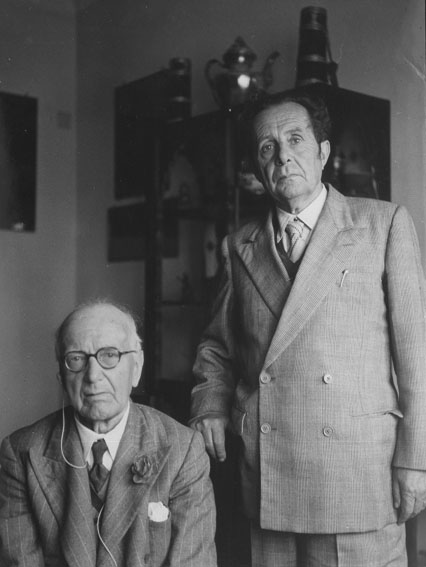
 Tucci was a natural linguist, learning Hebrew and Latin in his childhood, before turning to Sanskrit, Tibetan and Chinese. Tucci was an explorer, making several expeditions to Western Tibet in the 30s, where he collected the materials (manuscripts, paintings and statues) for his scholarly work. And Tucci was a prolific writer. Among his many publications the Indo-Tibetica series and the two huge volumes of Tibetan Painted Scrolls are still essential reading.
 Thomas had little interest in the Buddhist materials from Dunhuang, and his work focused on early Tibetan history (letters, military communiqués and the like) and folklore. Most of this work was put together and published by Thomas after he retired to a cottage in Oxfordshire, where he worked in a damp and chilly study (at least he complained often in his letters that it was so). Here he put together his great 4-volume series of historical texts Tibetan Literary Texts and Documents from Chinese Turkestan, collected narrative texts in Ancient folk-literature from North-Eastern Tibet, and a study of the extinct Nam language (his equally pioneering work on the Zhangzhung language still remains unpublished).
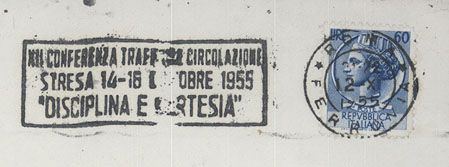 (The stamp and postmark from the envelope containing the photograph, marked October 1956. On the back of the photo, Francesca Bonardi wrote: “Con tanti cari auguri dal Prof. Tucci e da.”)

 early Tibet