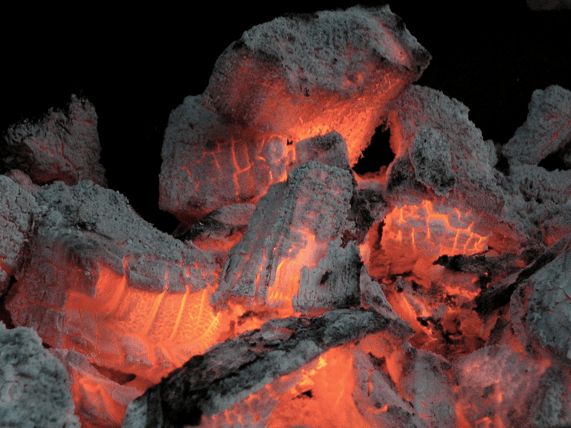
The Decline of Buddhism IV: Keepers of the flame

embers

Whether or not the Tibetan emperor Lang Darma really did persecute Buddhist monks and monasteries, as he is said to have done during his ill-fated reign in the 840s, there is no doubt that a catastrophic collapse did indeed occur in Central Tibet. As society fragmented, revolutions and civil wars broke out and the Buddhist monasteries were abandoned. In Central Tibet, monastic Buddhism was all but wiped out. It took over a century – a Dark Age for Tibetan Buddhism – till monks began to appear in Central Tibet again.

There’s a tradition that monastic Buddhism survived in Tibet thanks to a few heroic monks, keepers of the flame of the monastic lineage. According to an old Tibetan saying, during this dark age the embers of the Buddha’s teaching were kept in the East. The story is that several monks refused to renounce their robes, and instead hit the road as Buddhist refugees. After much travelling they ended up in Amdo in Tibet’s northeast, which had avoided the complete collapse of monastic Buddhism. These refugees had taken their books with them, including most importantly the books of the vinaya, the monastic code that is the heart of the tradition of monastic ordination. This ensured the survival of the ordination lineage through the dark age.

Tradition preserves the names of a few of these refugee monks who settled in Amdo.The chaotic flight and eventual resettling of these monks is summarized in a passage from Nelpa Pandita’s history:

Yo and Mar, with a Central Asian monk called Shakya Sherab acting as their servant, settled in the rocky cave of Anchung Namdzong. Tsang settled in the temple of Khangsar Yaripug. Kwa Ö Chogdragpa, returning from Nepal, heard the news and left on the road to the north with a mule-load of abhidharma texts, finally settling in the temple of Palzang Kharchag Drilbu. Lhalung Rabjor Maldrowa and Rongtön Senge Drag left Yerpa with many books of vinaya and abhidharma, fleeing to Nagshö. After that, Lhalung settled in the temple of Dashö Tsal and Rongtön settled in Jang Chajerong.

Most later histories also add that Lang Darma’s assassin, Lhalung Palgyi Dorje, fled to Amdo too. In any case, the crucial point is that the first three of these refugees (Yo, Mar and Tsang) passed on their ordination lineage to a young local fellow. This young man had been brought up in the local non-Buddhist traditions, but had developed some faith in Buddhism and decided to ask the refugee monks for ordination. With the help of two Chinese monks, the young man was ordained, and given the religious name Gewa Rabsel.

*  *  *

Apparently Gewa Rabsel became an important figure in the religious scene of Amdo, but we don’t really know much about him. He is said to have spent a significant portion of his life teaching at the monastic mountain retreat of Dentig, which still exists in a valley west of Lanzhou. Gewa Rabsel ordained many local Amdo monks, and later histories also make Gewa Rabsel the religious preceptor of the famous men who came from Central Tibet in search of a living ordination lineage. These men (their number various in the sources) were the ones who brought the ordination lineage back to Central Tibet, and gradually restored Samyé and many other old monasteries that had fallen into ruin.

The story is convincing in its general outlines. There certainly must have been refugee monks, there probably was a Gewa Rabsel, and the idea that the monastic lineage was brought back to Central Tibet from Amdo is convincing. But even the Tibetan historians had some doubts about it. The main problem is the idea of Gewa Rabsel ordaining the men who brought the monastic lineage back to Central Tibet. Considering that the refugee monks who ordained Gewa Rabsel  arrived in Amdo some time in the 840-50s, and the “men of Central Tibet” received their ordination from him some time in the 970-80s, Gewa Rabsel would have to have lived an unfeasibly long time.

In fact we don’t have to accept this part of the story, even if we stay with the traditional histories. Though some early historians, notably Butön, had Gewa Rabsel ordaining the men from Central Tibet, others were not so sure. Sönam Tsemo wrote in the 12th century of this ordination lineage: “Some say it was received from Lachen Gewa Sel. Some say it was received from Tülpa Yeshe Gyaltsen.” And Nelpa Pandita, in his 13th century history, argued that there couldn’t be a direct connection between Gewa Rabsel and the monks who brought Buddhism back to Central Tibet:

Now, between the iron bird year when the dharma was snuffed out and the earth bird year when the embers were fanned and dharma communities appeared in Central Tibet, nine year-cycles passed. For 109 years there were no monks in Central Tibet. Therefore to say that the six men of Central Tibet received their vows from Lachen Gongpa Sel is a deceptive explanation which is utterly wrong.

In truth, Nelpa Pandita argues, the men of Central Tibet were ordained by one Drum Yeshe Gyaltsen – a disciple of a disciple of Gewa Rabsel and  no doubt the same person as the Tülpa Yeshe Gyaltsen mentioned by Sönam Tsemo. Similarly, Gö Lotsawa in the Blue Annals also denies any connection between Gewa Rabsel and the six men of Central Tibet, although he does say that some other histories make that connection. So a longer, and more convincing lineage for the keepers of the flame looks like this:

  1. The refugees: Yo, Mar and Tsang
  2. Gewa Rabsel
  3. Yangong Yeshe Yungdrung
  4. Drum/Tülpa Yeshe Gyaltsen
  5. The men of central Tibet

*  *  *

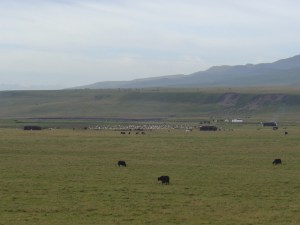
amdo-grasslands

So who was this Drum Yeshe Gyaltsen? He was a local Amdo man who was ordained by one of the students of Gewa Rabsel. He established a monastery in Amdo, which followed a fairly strict interpretation of the vinaya, banning agriculture and animal husbandry, as well as luxurious cushions or carpets. Interestingly, he also banned political activity and certain  funeral rituals involving the inscription of syllables (which could have been a good source of income for the monks).

Despite its strictness, Drum’s monastery seems to have been quite successful, and its ordination lineage became known as “the lineage of the ascetics” (tsüngyü). Why “ascetics”? Well, there was also another Amdo lineage known “the lineage of the scholars” (khégyü), which came from a monastery established by a monk called Nub Palgyi Jangchub and was much more lax in its discipline. It was mainly distinguished from Drum’s lineage by the fact the monks were allowed to meddle in politics. As a result, Nelpa Pandita says that the monks of this lineage “were of little use for religious training.” Nyangral’s history doesn’t mention the specific differences between the lineages, but does suggest that the split came about because of “a little bit of wordly activity.”

The difference between the approaches of the two lineages is illustrated in this amusing story about their two founders (from Nelpa Pandita’s history):

One day Drum went to the residence of Nub, and they talked a lot about the dharma. Then Drum said, “Let’s sleep; where shall I make my bed?” Nub replied, “Here, same as me.” Drum said, “They say you drink alcohol in secret. Can I stay in the attic?” Nubs replied angrily, “Ha! you’re so strict, it’s like you have wood for brains!” Thus Drum became known as “Wood-for-Brains”.

In the end, Drum had the last laugh. It was his lineage of ascetics that was passed down to the six men of Central Tibet and used to revive the monasteries there. The restoration of the temples, and the ordination of hundreds of new monks, set the scene for the “later diffusion” of Buddhism in Tibet – the visit of Atisha and the Kadam school that grew up around his teachings, the new scholasticism of Shalu monastery, and so on… This ordination lineage even survived into the 20th century in the Nyingma tradition as the Mindröling lineage, and in the Gelug tradition as the “Abbot’s lineage of Lachen”.

Apart from these survivals, it has to be said that the ordination lineage from Gewa Rabsel was ultimately eclipsed by new ones. In fact it had a rather controversial reputation, some people objecting to the fact that the refugee monks and Gewa Rabsel had performed all of three stages of ordination in a single ritual. Others defended this practice by pointing to the sublime nature of Gewasel and his preceptors, and the dire straits in which the monastic ordination found itself in the period of fragmentation.

Gewa Rabsel remains one of the culture heroes of Tibetan Buddhism, who kept the flame of the monastic lineage alive and passed it on so that it was eventually brought back to Central Tibet, where it lit the fires of a Buddhist revival. Let us also not forget Drum Yeshe Gyaltsen, the wooden-headed abbot who kept his monks free enough from politics to preserve a meaningful model of monasticism for the Tibetans of the generations to come.

*  *  *

See also:
The Decline of Buddhism I: Was Lang Darma a Buddhist?
The Decline of Buddhism II: Did Lang Darma persecute Buddhism?
The Decline of Buddhism III: Why should the secret mantra be kept secret?

Some thoughts on the dates of Gewa Rabsel…
Gewa Rabsel’s name has several variations: he is known as Gewa Rabsel or simply Gewa Sel, as Gongpa Rabsel or Gongpa Sel, and often merely by the honorific Lachen (“great lama” or “great soul”). His dates are not given in the earlier sources, but the Blue Annals states that he was born in a water mouse year, and died in a wood pig year, at the age of 84. Traditionally these dates are supposed to be equivalent to 952–1035, but this is skewed by the mistake made by all later Tibetan historians in dating the death of Langdarma a whole 60-year cycle too late, So we should move these dates back one cycle, giving us 892–975.

Even with those earlier dates, the connection with monks fleeing central Tibet in the 840s or 850s seems rather unlikely. If we move them back by one further sixty-year cycle to 832–915, Gewa Rabsel would have been a young man when the refugee monks arrived in Amdo. This does place him rather far from the revival of monastic Buddhism in Tibet at the end of the tenth century, but that’s not a problem if we follow the histories that don’t insist on a direct connection between Gewa Rabsel and the six men of Central Tibet.

And on the names of Yeshé Gyaltsen…
The name Tülpa (thul pa) Yeshé Gyaltsen given by Sönam Tsemo is probably a corruption of Dülwa (‘dul ba), and a “Dülwa Yeshé Gyaltsen” does indeed appear in some histories. So Tülpa and Dülwa Yeshé Gyaltsen were surely the same person. What about Drum Yeshé Gyaltsen? Since Drum (‘grum) is a clan name, while Dülwa an honorific indicating an expert in the vinaya, it’s likely that these names also refer to a single person.

As for Drum’s nickname “Wood-for-Brains”, this is shing klad can in Tibetan. Here I’m following Helga Uebach’s reading of Nelpa Pandita’s text, which actually gives shing glag can. The same story features in the Nyangral Nyima Özer’s history, where we have shing rlag pa can. (Note that in this version Nubs also gets a nickname, phag shing rta, which might be translated as “Pig Wagon”.) Finally, in the Sba bzhed (R.A. Stein’s version) we have phying klag can. Not at all conclusive I know, but I like Uebach’s solution.

*  *  *

References (Tibetan dharma histories)
1. Butön Rinchendrup: Chos ‘byung gsung rab rin po che mdzod. Beijing: Khrung go bod kyi shes rig dpe skrun khang. 1988. English translation in Obermiller, E. 1931-2. The history of Buddhism (Chos ḥbyung) by Bu-ston. I The Jewellery of Scripture, II The history of Buddhism in India and Tibet. Heidelberg: O. Harrosovitz. Reprint 1986, New Delhi: Sri Satguru Publications.
2. Gö Lotsawa Zhönupal: Deb ther sngon po. Chengdu: Si khron mi rigs dpe skrun khang. 1984. English translation in Roerich, G.N. 1949. The Blue Annals. Calcutta: Royal Asiatic Society of Bengal. (See p.67.) Also available here.
3. Nelpa Pandita: Ne’u chos ‘byungNel-pa Paṇḍita’s Chronik Me-tog Phreṅ-wa: Handschrift der Liberary of Tibetan Works and Archives, Tibetischer Text in Faksimile, Transkription und Übersetzung. Munich: Kommission für Zentralasiatische Studien, Bayerische Akademie der Wissenschaften, 1987. (The first quote is from pp.122-3 and the others from pp.128-9.)
4. Nyangral Nyima Özer: Chos ‘byung me tog snying po – facsimile in Schuh, Dieter. Die grosse Geschichte des tibetischen Buddhismus nach alter Tradition rÑiṅ ma’i chos byuṅ chen mo. Sankt Augustin: VGH Wissenschaftsverlag. (See p.445-6. Nyangral mentions another Amdo ordination lineage, called Me(rme), and unlike other sources, he apparently states that the both the ascetics’ and scholars’ lineages lasted and became famous in Central Tibet, though it isn’t very clear – see p.446.5.)
5. Sönam Tsemo: Chos la ‘jug pa’i sgo – in Sa skya bka’ ‘bum, vol.I (See p.318b).
6. T.G. Dhongthog Rinpoche: Sa skya’i chos ‘byung. New Delhi. 1977.

References (English works)
Davidson, Ronald M. 2006. Tibetan Renaissance: Tantric Buddhism in the Rebirth of Tibetan Culture. New York: Columbia University Press. (See Chapter 3 for an excellent account of this period based on a variety of historical sources.)

Also see here for a summary of the traditional story from the Berzin Archives.
The Golden Turtle: A Sino-Tibetan divination manuscript

goldentortoise

Astrology was, and surely still is, an important part of life in Tibet. As in most other Asian countries, astrology played the vital role of deciding whether to carry out an important activity – a journey, a marriage, a funeral, a battle – and which days were best for embarking on such activities. Tibetan astrology is often said to be a combination of Chinese and Indian astrologies. According to one history, it was the tsenpo Tridé Tsugtsen who introduced Chinese astrology to Tibet in the 8th century. The influence of Indian astrology comes mainly through the Kālacakra tantra I believe, from the 11th century onwards.

There is an old saying, going back to the time of the Tibetan empire, that characterises Tibet’s neighbours according to their special talents (at least in Tibetan eyes):

  • To the south is India, the land of religion
  • To the north is Turkestan, the land of horses, weapons and war
  • To the west is Persia, the land of wealth, jewels and trade
  • To the east is China, the land of divination and astrology

Tibet already had a divination method that had little to do with Chinese astrology, in which dice were used to consult oracle deities – the ancestor of the mo divination still practised today. But the study of the stars and their portents was something the Tibetans encountered, and apparently were impressed with, in their early contact with China.

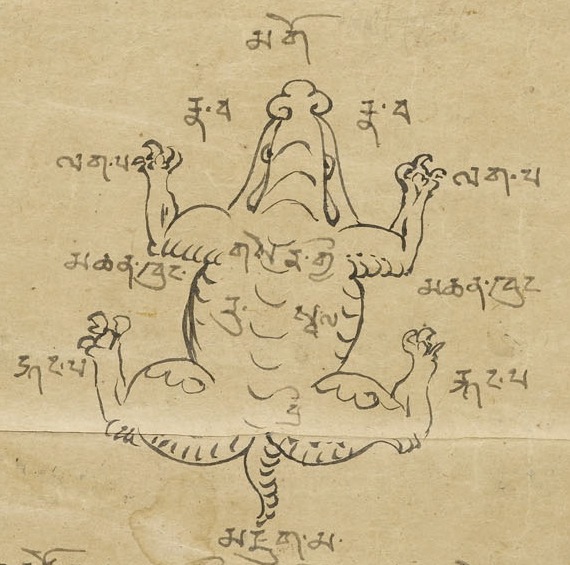
Now I wouldn’t be venturing into an area of which I know so very little, were it not for an amazing and totally unexplored manuscript from the Dunhuang cave that looks like the earliest Tibetan text on Chinese-style astrology – Or.8210/S.6878. It’s been written on the back of a Chinese sutra, and since it was filed along with the Chinese scrolls, the Tibetan side was ignored. How, I don’t know. It’s full of diagrams and ends with the rather strange tortoise that graces the top of this post. So I will say a little about this manuscript, and hope to learn something from anyone who knows more about the subject and is kind enough to comment.

*  *  *

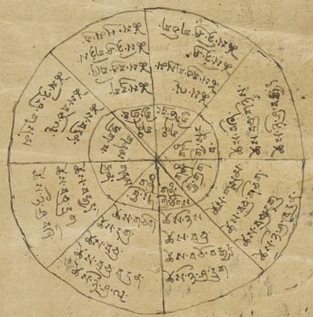
s6878_diagram1The first diagram comes under the heading “divining the good and bad dates for beginning a journey.” The first result is this:
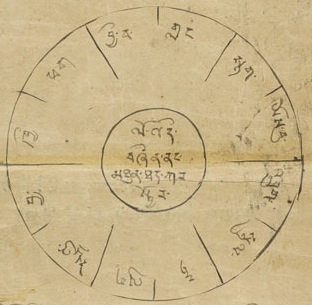
When the day falls in the “gate of the sky”, if you go on a long journey, it will be good and auspicious.

If you look in the diagram, the “gate of the sky” (gnam gyi sgo) is one of the eight divisions of the diagram, under which is written “the 1st day, the 9th day, the 10th day, the 17th day and the 25th day.” So the sky is divided into eight parts.

I guess it’s not so difficult to do this astrology after all – just check the day of the month against the diagram, and read the result. There are bad days too:

When the day falls in the “junction of the sky”, wherever you go a great loss will occur – very bad.

The word I translated as “loss” is god ka, which usually means a financial deficit, so I have the feeling that the main purpose for making this astrological calculation is to check on the possible success of a journey for the purpose of trade. That is, travelling merchants (not scarce on the Silk Route) would ask an astrologer (probably a Buddhist monk) to check the best days for embarking on a journey. I say “probably a Buddhist monk” because these astrological diagrams have been written on the back of a Chinese Perfection of Wisdom sutra.

*  *  *

s6878_diagram2Other diagrams on the scroll contain the twelve animals of the Chinese and Tibetan zodiacs, and underneath is the phrase “If the male and female are joined in this way…” The animal years in the Tibetan calendar always come in male or female form (usually the even-numbered years are the male ones, and the odd-numbered years the female). Note that in the diagram here the animals are divided into pairs. This could be a combination of the animal of the current year with the animal of the day, or of one’s birth year, but I haven’t been able to work this one out yet.

And what of the star animal of this manuscripts – the golden turtle? Well, in early China (I mean the Han dynasty if not earlier) the main methods for divination were to use bones, yarrow sticks and turtle shells. It was the ability of the turtle to live to a great old age that attracted people to it. Turtles from the Yangtse River were thought to have divine powers, and those over a foot long were believed to be a thousand years old. In their age they represented wisdom and – unfortunately for the turtles – longevity, with the inevitable result that they were eaten as a remedy for the problems of old age. Pictured below is the Chinese Pond Turtle, also known as the Golden Turtle.

chinesepondturtleTurtles – which have the lovely name rubel (rus sbal) in Tibetan – also had a cultural significance in Tibet. Have a look at the metaphors and riddles of Padampa Sangyé attached to the redoubtable Tibeto-Logic site here. One asks “who drew the design on the turtle’s back; who was the artist?” Which brings us to the fact that the turtle depicted here appears to be without its shell. In fact it looks suspiciously like the artist had never seen a real turtle.

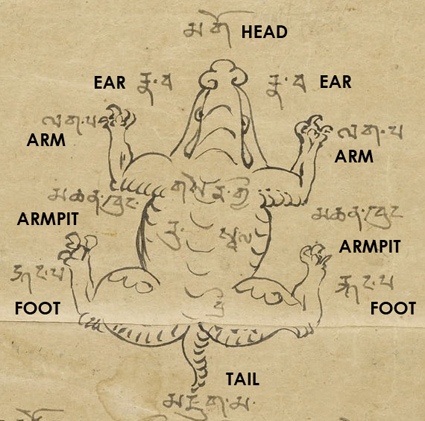
So, how to do the turtle divination? The instructions are quite straightforward, although you need to know what a lunar day is. You need to count the number of lunar days since the day you lost the thing, going around the points of the turtle, and then take the result from where you end up on the turtle’s body. If you lost the thing within thirty days, start at the head and go round clockwise. If it’s over thirty days, start at the bottom and go round anticlockwise. And if you don’t read Tibetan, here’s a translation of the body parts

*  *  *

Translations

The divination practice (mo) of the golden turtle: for finding things that have escaped or been mislaid.

Whichever lunar day it happens to be, calculate from the first day it was lost to the current lunar day, and the result is found in connection with where this falls on the body part of the turtle. If it was lost within the last thirty days, then count to the right from the head. If it is not within thirty days, then count going round to the left from the tail. Write the good or bad result at the turtle’s tail.

  • If it was lost on the lunar day of the head, it will be found if you look in the vicinity of a laundry washer.
  • If it was lost on the lunar day of the ears, then even if you come across it on the road while searching for it, it will not be beneficial to get your hands on it.
  • If it was lost on the lunar day of the arms, you will find it if you look for it on a high mountain, in a ravine, or in the middle of a graveyard.
  • If it was lost on the lunar day of the armpits, you will find it if you look for it at the goldsmiths, at the watermill, or in the town centre.
  • If it was lost on the lunar day of the feet, you will find it if you look at the the royal gates, the minister’s place, or the conference site.
  • If it was lost on the lunar day of the tail, you will find it if you look in the direction of your girlfriend.

*  *  *

Tibetan text
@//gser gyI ru bal mo ste//bros pa dang/rlag btsal pa’/zla ba gang la bab kyang rung ste//tshes zhag gcig nas bgrangs la stor pa’I/nyi ma ru sbal kyi tshigs gar bab pa dang/sbyar te gdab bo/zla ba sum/cu thub na nI/mgo nas g.yas logsu bgrang/zla ba sum cu myi thub na ni/mjug bas g.yon logsu bskor te bgrango//bzang ngan gyi tsigs ni/ru sbal kyi mjug du bris so//
@//mgo ‘i nyi ma la/stor na btso blag mkhan gyI/ ‘khor du btsal na rnyed//rna ba’I nyi ma la stor na/btsal te lam du phrad kyang /bdag gI lag tu thob la myI phan no//lag pa’I pa’I nyi ma la stor na/rI mthon po dang/grog mo dang/mchad khrod du/btsan (=btsal) na rnyed//mchan khung gI nyi ma la stor na/gser mgar dang/rang tag (=’thag) dang/grong ‘khor du btsal na rnyed//rkang pa’I nyi ma la stor na/rdze (=rje?) sgo dang/zhang lon dang/ tshong dus su btsal na rnyed//mjug ma’I nyi ma la stor na/grog (=grogs?) mo pyogsu btsal na rnyed//

Translator’s notes

  • Two words I am uncertain about here are grong ‘khor, which I have tentatively translated as “town centre”, and rdze sgo, which I have even more tentatively translated as “royal gates” (assuming rdze = rje).
  • The word tshong dus, which I’ve translated as “conference site” is found in the Dunhuang manuscripts referring to several places where royal/governmental conferences were held during the Tibetan empire. Later, it usually means a marketplace.
  • I’ve chosen to read grog mo in the final sentence to grogs mo, changing a ravine to a girlfriend. Since we already had a ravine in an earlier result, it seems redundant here. I like this reading, but it might not be right.

*  *  *

References
1.Baumann, Brian. 2008. Buddhist Mathematics According to the Anonymous Manual of Mongolian Astrology and Divination. Leiden: Brill.
2. Cornu, Phillipe. 2002. Tibetan Astrology. Boston: Shambhala.
3. Loewe, Michael. 1994. Divination, mythology and monarchy in Han China. Cambridge: Cambridge University Press.
4. Ho Peng Yoke. 2003. Chinese Mathematical Astrology. London: Routledge Curzon.

What happens between death and the tomb?

The funerals of the ancient Tibetan kings (the tsenpos) were solemn ritual affairs involving a range of specialist priests and lasting months or even years. At the end of the whole process, the tsenpo was buried in a huge mausoleum made of packed earth. It is not very clear exactly what happened during the long period between the tsenpo’s death and his interral in the tomb. But there is a crucial passage in one of the stories in the Old Tibetan Chronicle from Dunhuang, which tells of how the first funeral ceremony for the Tibetan tsenpos came about.

The vital passage appears in the story of Drigum Tsenpo, the first of the royal line not to pulled back up to heaven on a sky cord. In the story, the tsenpo’s body has remained on earth and, to add insult to injury, been kidnapped by a spirit. The spirit demands a child as a ransom for the body of the tsenpo. When a child fitting the purpose is found, the child’s mother makes certain demands that set the precedent for the funeral rituals of the tsenpos for all futurity:

When he asked the mother, “What do you want in recompense for her?” the mother answered: “I want nothing but this: that in all future when a bTsan-po, who has withdrawn as a ruler, dies, a top-knot of the hair should be bound like a braid, the surface (ngo, of the body) should be anointed with vermilion (mtshal), the body should be lacerated and scratched, incision should be made into the corpse of the bTsan-po, and it should be taken away from men that it may decay. Food should be eaten and drunk. Will you do like that, or will you not do like that?” Thus she spoke. (Haarh 1969: 405)

Now, Haarh’s work is a tour de force, but I have some doubts about his translation here. And since one often sees it repeated in accounts of the funerals of the tsenpos, it seems worth having another look at it. Since it’s such an important passage, I don’t want to be dogmatic here. I will just suggest an alternative way of reading the text.

The piercing of the tsenpo’s corpse is mentioned in the Old Tibetan Annals for the tsenpo Dusong (in 778/9) and the regent Tri Malo (712/3). As Haarh says, this probably refers to an embalming treatment of the corpse. But there seem to be no references to cutting off the tsenpo’s hair, anointing his face with vermilion and lacerating his body. And another reason to think the mother is not talking about the tsenpo here is that ordinary words for face and body (ngo and lus) are used, rather than honorific ones (zhal and sku). I also think that it’s logical to translate this passage so that the mother starts to talk about the treatment of the corpse when she specifically says “the corpse of the tsenpo” and not before that.

So, here’s a different way of reading this crucial passage:

When he asked the mother, “What do you want in recompense for her?” the mother said: “I want nothing but this: that forever to come when a noble tsenpo dies, [the mourners] cut off their topknots, anoint their faces with vermilion, and lacerate their bodies. The corpse of the tsenpo is to be pierced, and taken away to the people. The food is to be eaten and drunk. Will you do it like that?”

If it is the mourners who cut off their hair, paint their faces and cut their bodies, and not the tsenpo, that means we need to revise our ideas of the funeral practices of the early Tibetans a little. What interests me most is the way this reading of the text brings the funeral rituals of the tsenpos closer to those of other Eurasian cultures – for example, the Scythians. We know quite a lot about the funerals of the Scythian kings because Herodotus wrote about them in the 5th century BC. Here’s what he wrote:

The tombs of their kings are in the land of the Gerrhi, who dwell at the point where the Borysthenes is first navigable. Here, when the king dies, they dig a grave, which is square in shape, and of great size. When it is ready, they take the king’s corpse, and, having opened the belly, and cleaned out the inside, fill the cavity with a preparation of chopped cypress, frankincense, parsley-seed, and anise-seed, after which they sew up the opening, enclose the body in wax, and, placing it on a wagon, carry it about through all the different tribes. On this procession each tribe, when it receives the corpse, imitates the example which is first set by the Royal Scythians; every man chops off a piece of his ear, crops his hair close, and makes a cut all round his arm, lacerates his forehead and his nose, and thrusts an arrow through his left hand.*

And as a commentator on Herodotus recently wrote: “The magnificent funerals of the Scythian kings have several parallels among Eurasian nomads of every age…” Indeed, restricting ourselves to the practices of cutting off the hair and self-laceration among mourners, we can easily pick out the following further examples. It was reported that at the funeral of Attila the Hun, mourners cut off their hair and made deep cuts in their faces. They kept the body in a ceremonial tent for a time before being buried. The Xiongnu (a nomadic empire that ruled northern China for a while in the 3rd and 4th centuries AD) buried their kings in large tombs, and plaits of hair have been found in some of those that have been excavated. The Khazars (around in the 7th-11th centuries) buried their dead in mausoleums near rivers, and at the funerals they beat drums, whistled and lacerated their faces. And so on

What we see again and again is the mourners cutting off their hair and lacerating their faces and bodies. This seems to me to be quite persuasive circumstantial evidence for rereading the Old Tibetan Chronicle in the same way. It also shows just how much the religion of the early Tibetan clans preserved the culture of their nomadic ancestors from the northern steppes. Other aspects of the tsenpo’s funerals which I haven’t mentioned here are also found among Eurasian nomadic peoples – like the long period elapsing between death and burial; the sacrifice of animals, especially white ones, and especially horses; and the killing and entombment of the king’s retainers.

I think all this helps us to see the early Tibetan religion (at least the myths and rituals surrounding the tsenpos) in the wider Eurasian cultural matrix shared by Scythians, Huns, Khazars, Turks, Mongols, and many more people of nomadic origin. If course that was only one part of the rich cultural heritage that characterized Tibet’s pre-Buddhist religion, but thanks to the success of the tsenpos, a particularly important part.

* * *

Tibetan text

Pelliot tibétain 1287, ll.44-47: de blu na ji ‘dod ces ma la drIs na / ma na re gzhan myI ‘dod / nam nam zha zhar / btsan po rje dbyal zhig nongs na / thor to ‘phren mo ni bcings / ngo la mtshal gyis byugs / lus la ni bzhags / btsan po ‘i spur la nI ‘tshog / myI la ‘phrog lom / zas la nI za ‘thung / de ltar bya ‘am myi bya zhes mchi nas /

And another note…

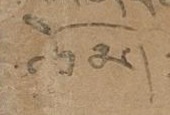
I also have doubts about the latter part of Haarh’s translation, that is, the line (referring to the tsenpo’s corpse “and it should be taken away from men that it may decay.” In Tibetan, this is myI la ‘phrog phom. For a start, I’m pretty certain the last syllable is not phom. I’ve been pouring over the image (see left) and I think the most likely reading is lom, though I’m not sure what this could mean in the context. In any case, that’s not a pha. Haarh interpreted this phom as a form of ‘bam pa, “decay”. There being no reason to read phom, there’s no reason to think the text is talking about decay. Why should it, when the point of piercing the tsenpo’s corpse was embalmment?

It’s also interesting that the Tibetan has myi la, not myi las — that is, it is not clear that the corpse is to be taken “from” the people. The point of the long delay before burial among the Scythians, Ossetians and the Mongols was to bring the corpse to various clans so that they could make offerings and pay homage. Could we read this line then as “it should be taken to the people”? As Haarh pointed out (on pages 358-60), the Old Tibetan Annals mentions corpses being placed in a ring khang, which he interpreted as a Totenhaus, or “house of the dead.” But this doesn’t necessarily exclude the possibility that the tsenpo’s corpse — like those of Scythian and Mongol leaders — was also taken of a grand tour of the major clans first.

Suggestions are welcomed, as ever…

* * *

See also
Buddhism and Bon I: the religion of the gods
The Red-Faced Men I: warriors with painted faces

* * *

References
1. Asheri, David, Alan Lloyd and Aldo Corcella. 2007. A Commentary on Herodotus, Books I-IV. Oxford: Oxford University Press.
2. Baldick, Julian. 2000. Animal and Shaman: Ancient Religions of Central Asia. London: I.B. Tauris.
3. Haarh, Erik. 1969. The Yar-lun Dynasty. Copenhagen: G.E.C. Gad’s Verlag.
4. Heller, Amy. 2003. “Archeology of Funeral Rituals as revealed by Tibetan tombs of the 8th to 9th century.” Transoxiana (Ērān ud Anērān Webfestschrift Marshak 2003). Click here.
5. Herodotus. (translated by George Rawlinson). 1885. The History of Herodotus, New York: D. Appleton and Company.

* You can see the Herodotus quote above in its proper context, which is Book 4 of the Histories, here.

Images
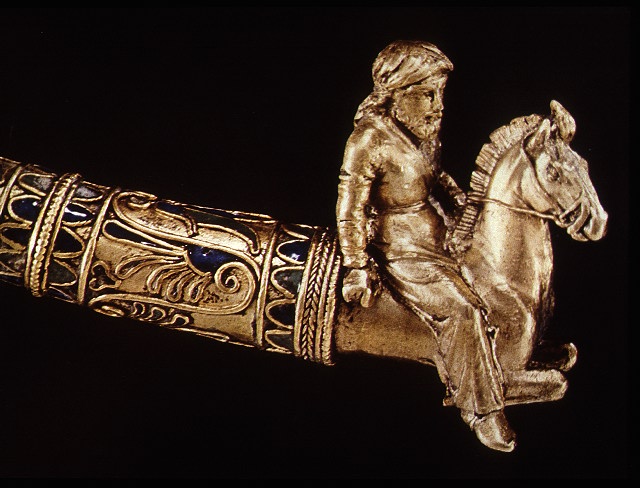
1. Scythian tomb-ware, from the website of CAIS (see here).
2. Pelliot tibétain 1287 (The Old Tibetan Chronicles).

Phagpa’s Arrow, or Buddhists vs Daoists

I think it might be fair to say that Tibetan Buddhism hasn’t often come into direct conflict with other religions. And although I’m all for the harmonious coexistence of religions, I find the few instances of head-on confrontation quite interesting. So let’s look at what happened once when Buddhism and Daoism came to blows.

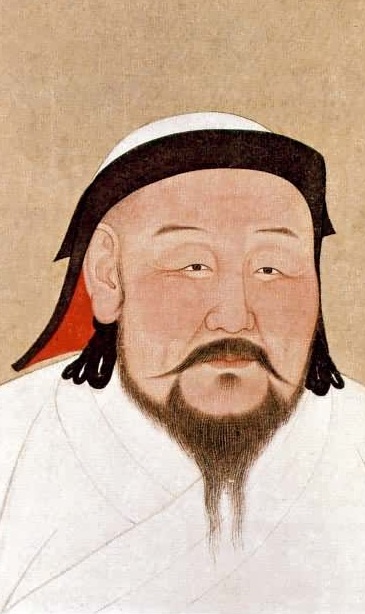
It was in the cosmopolitan court of Kubilai Khan, during the height of Mongol power. There was a new, vigorous school of Daoists, called Quanzhen. The school had been founded in the eleventh century, and by the twelfth it already had 4,000 monasteries and 20,000 priests. The school advocated an inner alchemy which rejected the use of elixirs, previously popular with Daoists, in favour of cultivating one’s inner nature (xing) and life-force (ming). More to the point, they were quite enthusiastic, shall we say, about propogating their religion.

During the 1250s, Quanzhen monks were roaming around China taking over small Buddhist monasteries and converting them to Daoist ones. Even worse, they were piling up the sacred books of these monasteries and burning them. They were also hanging around at the Mongol court, like everybody else, looking for patronage. It was here that the Daoists and the Buddhists started to squabble. Kubilai’s predecessor Mongke Khan convened two debates in 1255 and ’56 which the Buddhist side was represented by a mysterious monk called Namo. The second Karmapa, Karma Pakshi was at Mongke’s court at this time, and took part in the debate of ’56.

These were opening skirmishes. It was in the reign of Kubilai that the decisive debates took place. The monastery-occupying and scripture-burning activities of the Daoists had not abated. And now, adding insult to injury, they were also circulating printed copies of the Laozi huahu jing, a polemical text telling the story of how the found of Daoism, Laozi, travelled to India and invented Buddhism there as a lesser doctrine for the barbarians.

Kubilai’s imperial preceptor at this time was Chögyal Phagpa, the head of the Sakya school, and by the Khan’s command, ruler of Tibet. Phagpa was upset by the Daoists’ activities and asked the Khan to convene another debate. This time, the stakes would be higher – the losers would surrender their own scriptures to be burned.

We know that this debate really took place in the summer of 1258, thanks to Chinese and Tibetan historians. We also have Phagpa’s own account of it – “Verses on the Defeat of the Quanzhen Teachers” –  preserved in his collected works….

Urged by the Lord of Men himself,
Who possesses a great analytical mind
And increases merit and well-being everywhere,
The arrow transmitting the authentic scriptures,
Tipped with the vajra arrowhead of logic,
Was placed on the bow of analysis
And shot by the archer of inspired speech.

The Lord of Men is Kubilai, the secular parallel to the Lord of Sages, the Buddha. After offering his patron suitable praise, Phagpa characterizes himself as a sacred archer with an impressive extended metaphor. But did Phagpa’s arrow hit its target? He doesn’t tell us straight away, but instead goes on to desribe his Daoist opponent:

By striving on the path of the seer,
He has gained eyes of clairvoyance
And the powers of magic,
But due to the imprints of his countless previous lives,
He believes that the self exists in the material aggregates.
Thus he will never be a vessel
For the path to liberation.

This supreme teacher of the Quanzhen school,
Followers of the one they call Lao Jun,
Is well-versed in the texts of his tradition,
But has become completely intoxicated
By pride in his considerable fame,
And has looted and burned
Our books of scripture.

The name of the Daoist who went head to head with Phagpa is not preserved in any of the histories. A pity, since he was obviously well-known at the time. For Phagpa his first crime is philosophical: since he believes in the existence of a self, he will never understand Buddhism, the philosophy of nonself. His second crime is the pride that has led him to burning Buddhist books. So, who won?

Applying the elixir that transforms
The iron of a sound intellect
Into the golden teachings of the authentic scriptures,
I turned him into an upholder of the vows
Of the excellent yogic conduct of the Sage.

Ah, Phagpa won, and it seems his opponent, in the traditional way, converted to Buddhism. In fact, in the colophon Phagpa states that seventeen Daoist monks converted to Buddhism. By the way, did you see what Phagpa did with the metaphors in this verse? Rather sarcastically turning the Daoist tradition of alchemy against his opponent, Phagpa characterises his own Buddhist logical arguments as a kind of alchemy, transforming his opponents iron-like intellect into the golden Buddhist teachings. From archer to alchemist.

Phagpa ends by hoping the the news of his victory helps others turn to the Buddha’s path:

The learned enjoyed this very much,
And because of their enjoyment, news of this
Spread to the limits of the sky through the realms of men.
May this help all beings on the wrong path,
Or with no path, to enter the teachings.

What he doesn’t mention is that the after the debate, 45 Daoist scriptures were burned. Presumably these were the Daoist books kept at the Mongol court. That wasn’t the end of the problem. Another debate was convened in some decades larer, in 1281 (after Phagpa’s death). The Buddhists won again, and this time the entire Daoist canon (except for the Daodejing) was burned. And though that does seem to have been the end of Daoist influence at the Mongol court, it wasn’t the end of the Quanzhen school. They survived and remain to this day the largest school of monastic Daoism.

*  *  *

Colophon

For the sake of completeness, here’s the colophon to Phagpa’s verses:

In the past in China, the one called Tawo Shang Lao Jun was born after 82 years in his mother’s womb, and delighted in solitude. Striving for meditative absorption, he attained clairvoyance and magical powers. He gave advice on this path of his to students, and a religious system similar to the Śāṃkhya arose. His followers grew very numerous and came to be known as the Quanzhen school. Seeing that they were doing harm to the teachings of the Sūgatas, the Lord of Men Kubilai commanded a refutation this false system. On the 23rd day of the midsummer month of the male earth horse year (1258), Phagpa, having studied for a long time to achieve expertise in our own philosophical system, defeated seventeen [teachers] who became monks. This has been written as a commemoration.

*  *  *

References
1. Drogön Chögyal Phagpa. “Verses on the Defeat of the Quanzhen Teachers.” Sa skya bka’ ‘bum: 7.304.
2. Eskilden, Stephen. 2004. The Teachings and Practices of the Early Quanzhen Masters. New York: SUNY.
3. Tao-Chung Yao. 2004. “Quanzhen—Complete Perfection.” In Kohn, Livia (ed.), Daoism Handbook. (2 vols.) Leiden: Brill. II.567–593.

Images
1. Kubilai Khan, portrait (13th c?), National Palace Museum, Taipei.
2. Chögyal Phagpa, 18th century painting. Rubin Collection, HimalayanArt.com.